Custom Long Sleeve Shirts: Necklines, Fabrics and Fit Explained
News Details
Types of Necklines for Long Sleeve T-Shirts
A long sleeve shirt is not one product. It is a set of decisions — neckline, sleeve construction, hem shape and fabric — and the neckline is the one that sets the price bracket, the size grading and the decoration area before anything else is fixed. Four families cover most B2B programs.
| Neckline | How it is built | Where it fits |
|---|---|---|
| Crew neck | Ribbed neckband, coverstitch or twin-needle finish | Layering, retail basics, uniform |
| Quarter-zip stand collar | Self-fabric stand with zip and chin guard | Activewear, corporate, golf |
| Polo collar with placket | Collar band plus button or snap placket | Workwear, hospitality, smart casual |
| High neck / mock neck | Extended self-fabric collar, single or double layer | Base layer, cold-weather ranges |
Neckline and fabric have to be chosen together. A ribbed crew band recovers well on a 220 g cotton jersey, but the same band on a heavier, denser knit needs a stronger rib or it will stand away from the neck after a few washes. On stretch fabric the band must be cut to a stated ratio against the neckline opening and attached under controlled tension — that ratio, not the band width, is what stops the neckline from waving.
Quarter-Zip Long Sleeve Shirts: Collar, Zip and Hardware
A quarter-zip is the most specified long sleeve style in performance ranges because it solves a temperature problem: the wearer can vent without removing the garment. Our quarter-zip long sleeve shirt in Style 1802 is built on a High-Elastic Tech Blend with four-way stretch, moisture management, wrinkle resistance and shape recovery, and it pairs an ergonomic mock neck and half-zip with a self-fabric chin guard, raglan sleeves and micro-perforated side ventilation.
Four things belong on the specification sheet: zip length and slider type, whether a chin guard is required, collar height and how it is drafted to stand without stiffening, and how the bottom of the zip is anchored so it does not pull the placket out of line. The smooth surface of a tech blend is also what makes it a good decoration base — high-density chest embroidery, screen print, DTG and heat transfer all sit cleanly on it, and custom woven neck labels, care labels and branded zip pulls can be added for OEM orders.
Raglan Sleeve Construction: What the Diagonal Seam Changes
Raglan moves the sleeve seam from the shoulder to a diagonal line running from collar to underarm. That single change removes the shoulder seam and the bulk it creates, which is why raglan dominates sportswear and workwear: there is no seam pressing on the top of the shoulder, and the arm swings without pulling the body panel.
Three consequences matter when you specify it:
- Grading: raglan panels must be graded together or the diagonal line shifts between sizes.
- Decoration: the seam interrupts the chest and shoulder, so artwork has to be placed around it rather than across it.
- Fit tolerance: raglan is more forgiving across shoulder widths, which reduces size-related returns when a range is sold online.
Curved Hem Long Sleeve Shirts: Proportion and Layering
Hem shape changes the silhouette more than most specification lines suggest. A straight hem reads as a T-shirt; a curved hem with a slightly dropped back reads as a layer, because it breaks at a different point over trousers and stays put when the wearer reaches forward.
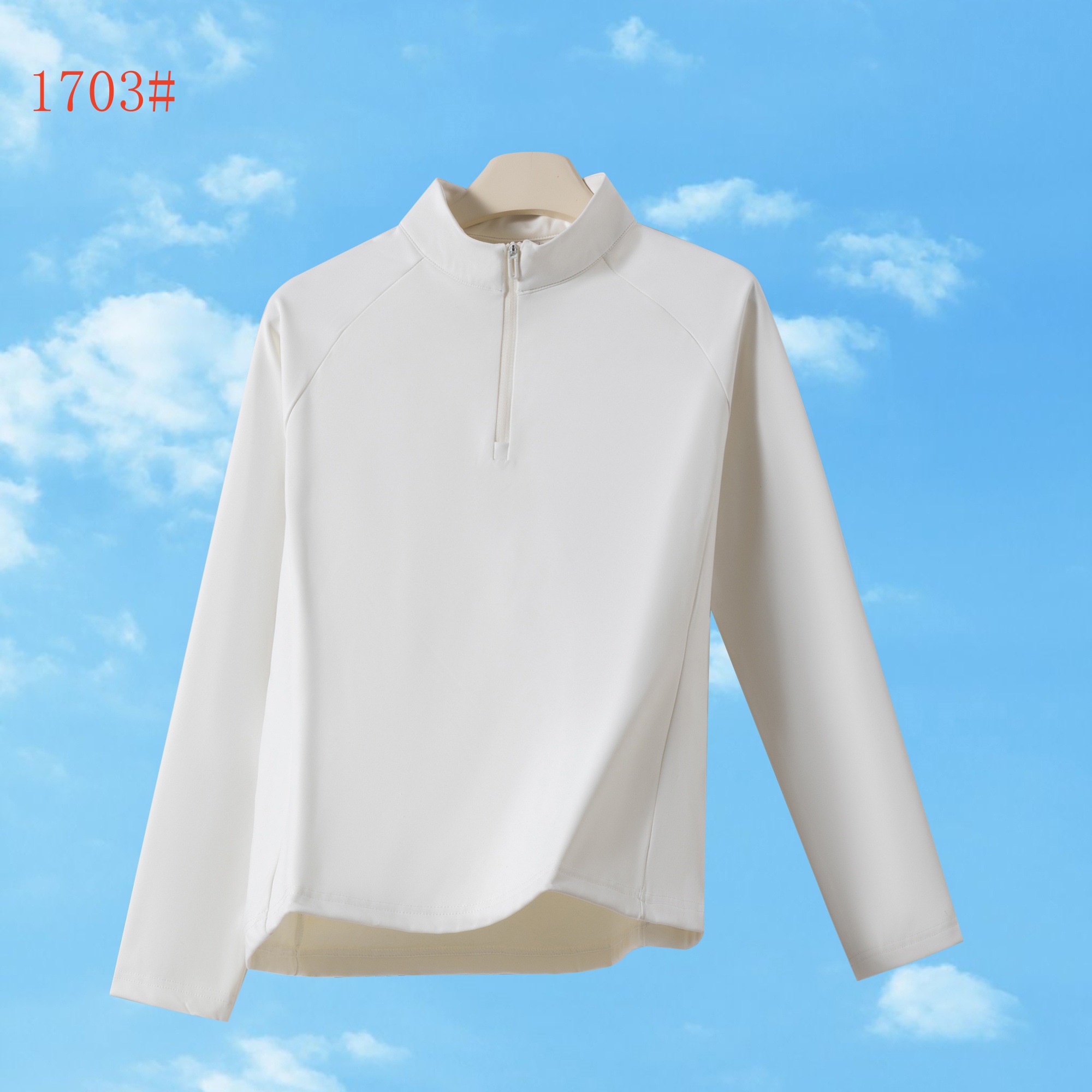
Two details are worth deciding early. First, the finish: a curved hem needs either a coverstitch or a self-fabric bind, and the bind adds a sewing step. Second, the relationship between side-seam length and centre-front length — if the curve is cut without adjusting the side seam, the shirt rides up at the hip. Curved hems also suit loose layering rather than tucked wear, so match the shape to how the range will actually be worn.
Long Sleeve Polo Shirts Wholesale: Collar and Placket Decide the Cost
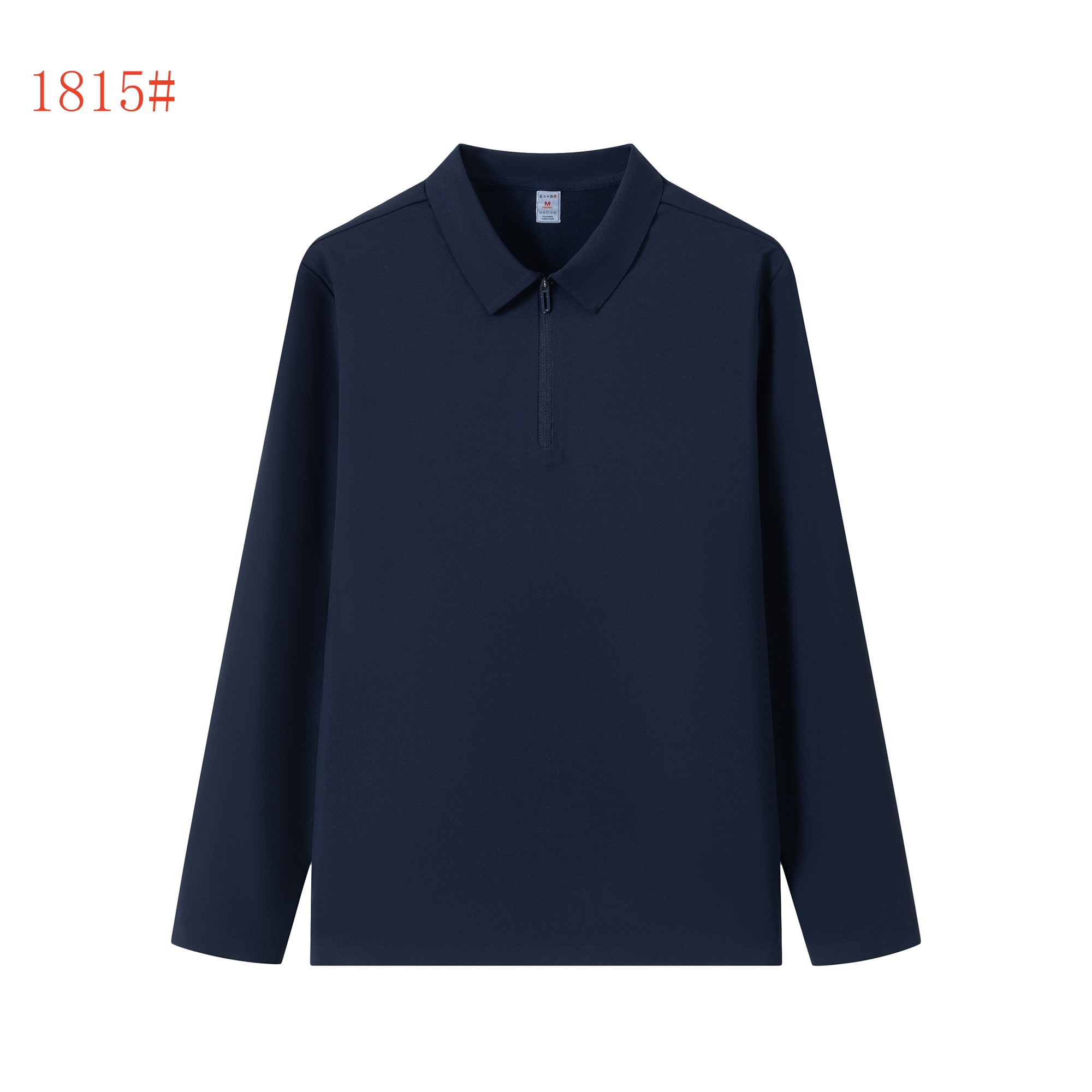
On a polo, the collar and placket carry the perceived quality, and they are also where the cost sits. A two-piece collar band holds its shape better than a single folded piece; a fused interlining keeps the collar points flat through washing, but changes the hand; and placket width, button count or a snap closure all change the pattern and the sewing time. Our long sleeve polo shirts in Style 1806 use a snap placket, which suits workwear and hospitality programs where buttons are a maintenance issue.
For decoration, the left chest is standard, but confirm the embroidery size against the collar fall — artwork that runs into the collar band looks wrong and is expensive to correct after bulk.
Long Sleeve Shirt Fabric Weight: 220 g, 230 g and Tech Blends
Weight decides opacity, drape and how much the garment moves with the wearer. Lightweight cotton jersey in the region of 180–200 g is a layering weight: comfortable, but pale colours can read slightly sheer under strong light. Cotton in the 220–230 g band is the practical middle for retail long sleeve tees — opaque in most colours, still soft enough to wear against the skin.
Above that, the fabric starts behaving like a sweatshirt body, and long sleeve styles in that range move closer to the sweatshirt line, where GSM is measured and approved the same way. On the performance side, weight is less useful as a guide than composition: a High-Elastic Tech Blend is chosen for stretch recovery and moisture handling, not for mass. Higher knit density is what gives those fabrics a crisp drape that holds through repeated washing.
Long Sleeve Shirt Sample Approval: What Gets Signed Off
Sample approval is the point where a long sleeve program stops being a description. The sample should be checked against a recorded list, not by eye: chest, body length, sleeve length from shoulder and from centre back, cuff opening and cuff depth, neckline width and depth, and the hem drop at front and back.
Alongside the measurements, approve the fabric weight and composition, the lab dip for each colour, the neckline and cuff rib, the hem finish, the decoration placement and technique, and the labels and packaging. Once that record exists, bulk is measured against it rather than against opinion. At Lihongwear, custom orders start at 200 pieces and run 15–25 days from sample approval to bulk delivery, with inspection under a seven-level AQL-based system and 100% checking of individual garments before packing.
Matching the Style to the Range
| Program | Neckline and sleeve | Fabric direction |
|---|---|---|
| Corporate and golf | Quarter-zip stand collar, raglan | Tech blend with stretch recovery |
| Workwear and hospitality | Polo collar, button or snap placket | Dense cotton or cotton blend for opacity |
| Retail basics and layering | Ribbed crew, set-in sleeve | 220–230 g cotton jersey |
| Fashion and streetwear | Crew or mock neck, dropped shoulder, curved hem | Heavier knit, garment wash if required |
The full custom long sleeve shirts range covers crew, quarter-zip, polo and curved-hem bodies in men's and women's fits, with fabric, colour and decoration developed to specification.
Frequently Asked Questions
Can one neckline be used across different fabric weights?
The style can, but the rib cannot. Each weight needs its own band ratio and tension, approved on a sample in that fabric — otherwise the neckline behaves differently between the light and heavy styles in the same range.
Is a quarter-zip worth the extra components?
It depends on use. A quarter-zip adds a zip, a placket and often a chin guard, so it carries more material and more sewing steps than a crew neck. It earns that when venting and a stand collar are part of the product promise — golf, corporate, training — rather than decoration.
Do curved hems add cost?
They add a finish step, usually a bind or a coverstitch along a longer edge, and they need the side seam graded to the curve. The design decision should be made before pattern making, not after sampling.


