Cooling Polo Shirts: Comfort Cotton Versus Seamless Nylon Build
How Cooling Polo Shirts Are Specified: Contact-Cooling Cotton Blends vs Seamless Nylon-Spandex, UPF and Mosquito Finishes, Collar Construction, Trims and Bulk Production Minimums
2026/11/18
Reading volume: 0
News Details
A cooling polo sells on a sensation, and sensations are hard to specify. The wearer feels the fabric go cool against the skin for the first few seconds, and that impression is what carries the garment in a warm market. What produces it, how long it lasts and what it costs to put into a garment are three separate questions, and suppliers rarely separate them.
This guide compares the two warm-weather polo routes in our range: a cotton-blend comfort fabric with an additive cooling finish, and a seamless nylon-spandex knit that relies on structure rather than chemistry. It covers what each claim really means, how the collar is built to survive laundering, and the order details worth settling before a bulk run. It is written for buyers sourcing cooling polo shirts for uniform, resort, golf and corporate programmes.
Two routes, one silhouette
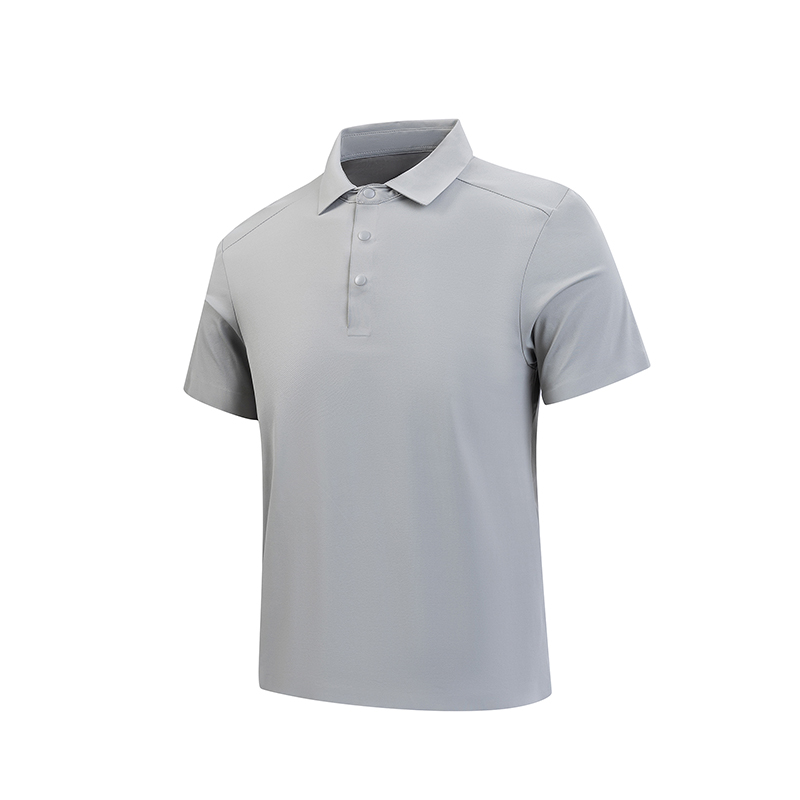
Both styles are short-sleeve polos with a three-button placket, and both are sold as warm-weather garments. Everything below the collar is different.
| Specification | 0808 Comfort Cotton | 0606 Seamless |
|---|---|---|
| Composition | Functional cotton blend | 87% nylon / 13% spandex |
| Cooling route | Micro-textured cooling fibre, contact cooling | Dense elastane knit, airflow and stretch |
| Moisture | Unidirectional dual-surface transport | Micro-geometry wicking |
| Sun protection | UPF fibre, built into the yarn | Density-dependent, test to confirm |
| Collar and buttons | Anti-flop collar, tonal resin buttons | Clean placket, tailored shoulder |
| Hand feel | Dry, cotton-like | Smooth, silky, cool to the touch |
The cooling comfort cotton functional polo shirts in style 0808 are the version a uniform buyer usually chooses, because the fabric reads as cotton in photographs and the collar holds a business-casual line. The performance seamless polo shirts in style 0606 take the opposite approach: an 87/13 nylon-spandex knit with four-way stretch, a tailored shoulder and a seamless finish, sold on movement rather than on a cooling additive.
What "instant cooling" means in practice
Cooling finishes work on contact. A micro-textured fibre presents more surface area to the skin, so heat moves out of the body faster in the first seconds of wear, and the wearer registers a cool sensation. It is a real effect, measurable as a contact-cooling value, and it is also transient: once the fabric reaches skin temperature the sensation disappears.
That is not a reason to avoid the claim, but it is a reason to write it carefully. "Instant cooling on contact" is defensible. "Keeps you cool all day" is not, and it is the phrase that generates returns in a hot climate where the garment has to perform in the afternoon.
The 0606 does not carry a cooling additive. Its coolness comes from the fibre: nylon conducts heat away from the skin faster than cotton, the dense elastane knit holds a smooth, cool face, and the four-way stretch lets air move as the wearer does. Buyers who have tested both usually describe the 0808 as cool at the start and the 0606 as cool throughout, which is a fair summary of how the two routes behave.
Sun protection is a fabric property, not a coating
On the 0808 the ultraviolet protection is built into the yarn rather than applied as a surface finish, which is why the mill describes it as lasting through washing. The protection level still depends on the fabric's density and colour: a tight knit in a dark shade blocks more UV than an open knit in white, at the same nominal rating.
Any UPF number that appears on a hangtag, a polybag or a product listing has to come from a test on the finished fabric, and the report should travel with the shipment. That is a documentation requirement rather than a manufacturing one, and it is the single most common gap in a protection claim. For buyers selling into markets that regulate sun-protection labelling, the test report is the product.
The 0808 also carries a botanical mosquito-repellent finish. It repels rather than kills, it is applied during finishing rather than bonded into the yarn, and its effectiveness depends on how much of the surface is treated and how the garment is washed. For resort and outdoor programmes in humid markets it is a useful secondary benefit; it should not be presented as a replacement for a repellent in an area where insect-borne disease is a genuine risk.
The collar decides whether it sells as a polo
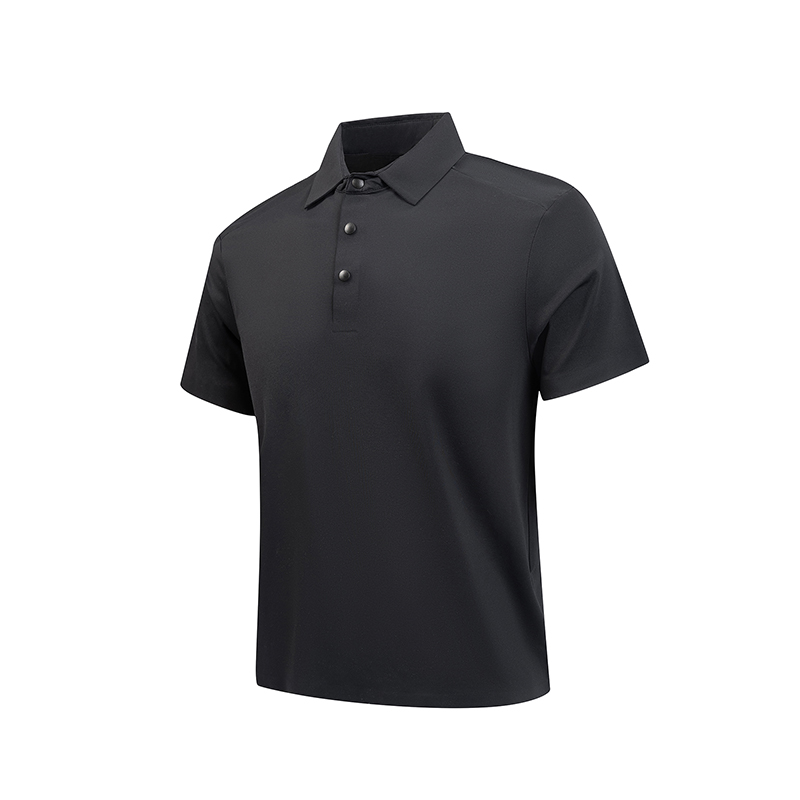
A polo collar has to stand on its own, fold flat when open and return to shape after washing. Three construction decisions determine whether it does: the interlining, the collar band length relative to the neck opening, and the seam that joins collar to body.
A soft fusible gives the collar body without making it rigid. An unfused self-fabric collar looks correct on a hanger and collapses after two washes, which is why the 0808 uses an anti-flop construction with stay stitching at the fold line to keep the points level. The band length is a pattern measurement: cut too long and the collar stands away from the neck at the front, too short and it pulls the placket open. Neither fault can be corrected at the sewing machine.
On the 0606 the collar is cut from the same stretch knit, so the interlining has to stretch with it or the collar will cup at the points. That is a different problem from a woven-collar polo, and it is why a stretch style should be sampled and washed before approval rather than judged on a hanger.
Placket, buttons and trims
Both styles use a three-button placket, and on both the buttons are the trim most often left unspecified. Tonal resin buttons read as a considered garment; contrast buttons read as sportswear; metal snaps read as workwear. On the 0808 the placket is finished with the same resin button as the stock sample, and on custom runs the button colour is matched to the fabric rather than to the thread.
Pantone matching applies to the fabric, the buttons, the thread and — where a zip or a tape is used — the trim. On a dark navy or black, thread that is one shade off is visible on every seam, so thread is normally matched to the fabric.
Decoration on a smooth technical face
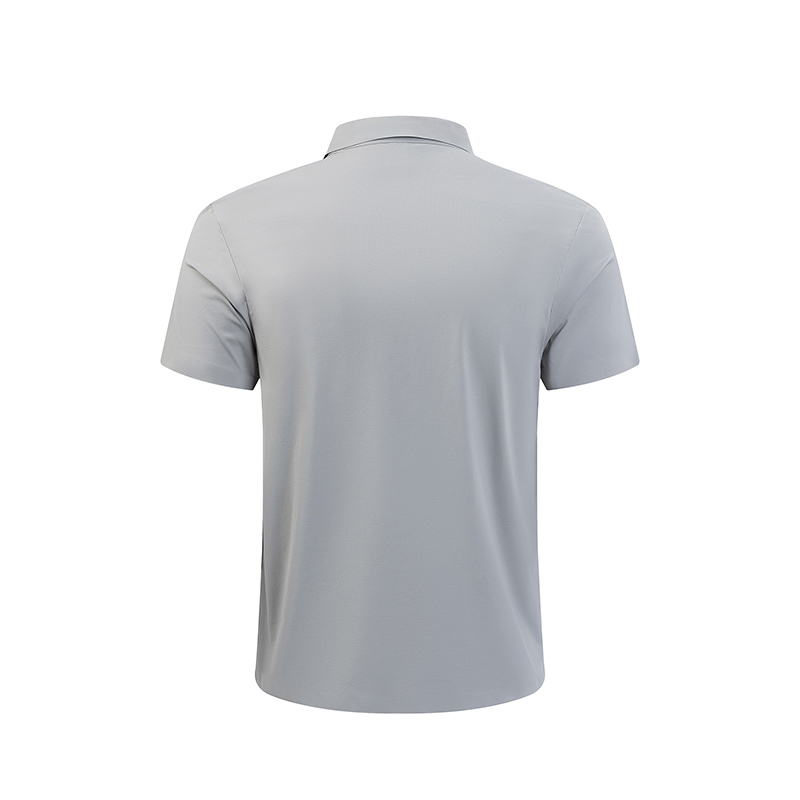
A smooth, high-density face is the best surface for silicone heat transfer, 3D gel printing and reflective accents, and small text stays legible at a size where a textured cotton would fill in. Flat-lock embroidery works on both styles; the backing has to be chosen for the fabric, because a stiff backing on a four-way stretch knit will show as a square through the front.
Large solid prints are the risk on both. On a stretch knit a wide plastisol block cracks at the edges when the wearer moves; on a cooling cotton the ink can block moisture transport in the printed area, which is why prints on performance garments are small and placed away from the back panel.
Heat-seal neck labels, printed care tapes, woven side-seam tags, hangtags and branded polybags are available on custom runs, and because they are applied during finishing they must be confirmed before production rather than before shipment.
Stock depth, minimums and the size run
Both styles are held in depth: the warehouse carries more than 200,000 blank units across core colours in a 5,000 square metre facility, and stock orders can start at ten pieces with dispatch inside three days. That is what makes these styles usable for uniform rollouts, where a buyer needs twenty pieces in a new colour before committing to a full programme.
Custom orders start at 200 pieces per style and per colour, with sampling in 5 to 7 working days and bulk production in 15 to 25 days once the sample is approved and the fabric is in stock. Both run from M to 4XL in stock; XS and 5XL are separate patterns and should be raised before sampling.
Quality inspection follows the AQL standard across the lot, with manual checks on collar symmetry, placket alignment, button security and dimensional accuracy. Buyers with their own process can arrange a third-party inspection at the factory before packing.
Questions buyers ask before ordering
Is the cooling polo a cotton shirt?
The 0808 is a functional cotton blend, not a 100% cotton pique. It reads as cotton in a photograph and feels drier than a nylon knit, but the cooling and moisture behaviour come from the fibre blend and the knit structure rather than from cotton alone.
Does the UPF protection wash out?
Because it is built into the yarn rather than coated on the surface, it is specified as lasting through washing. The rating still has to be tested on the finished fabric, and the report should accompany the shipment.
Which style suits a corporate uniform?
The 0808, in a dark core shade with a tonal embroidered logo. The cotton-like face reads as business casual and the collar holds its shape under a jacket. The 0606 is the better choice where staff are active outdoors and movement matters more than formality.
For a programme that covers both indoor and outdoor roles, the practical split is the 0808 for front-of-house and the 0606 for field staff, in matching core shades so the two read as one uniform. The wider range, including long sleeve and performance options, sits under custom polo shirts, and the factory can quote a mixed order once the size breakdown, colour and decoration method are fixed.
Share to:


