Custom Long Sleeve Polo Shirts: Snap, Zip and Collar Construction
How men's long sleeve polo shirts are specified for wholesale: covered snap versus quarter-zip plackets, collar construction, raglan versus set-in sleeves, knit choice and minimums.
2026/11/18
Reading volume: 0
News Details
A long sleeve polo is bought for the same reason it is hard to specify: it has to work in a golf shop, a corporate uniform programme and a business-casual retail rack at the same time. The collar and the placket carry that job. Change the closure from three buttons to a quarter zip and the same fabric sells into a different market at a different price.
This guide covers the three placket systems in our men's long sleeve range, how the collar is built to survive laundering, the difference raglan and set-in sleeves make to movement, and the order details worth settling before a 200-piece run. It is written for buyers sourcing long sleeve polo shirts for corporate, golf and uniform programmes.
Three closures, three markets
The placket is the only part of a polo that a buyer can identify from three metres away, and in practice it decides which channel the garment suits before the fabric is even considered.
| Style | Closure | Sleeve | Collar | Best for |
|---|---|---|---|---|
| 1801 | Covered 3-snap placket | Raglan | Self-fabric fold-over | Golf, training, teamwear |
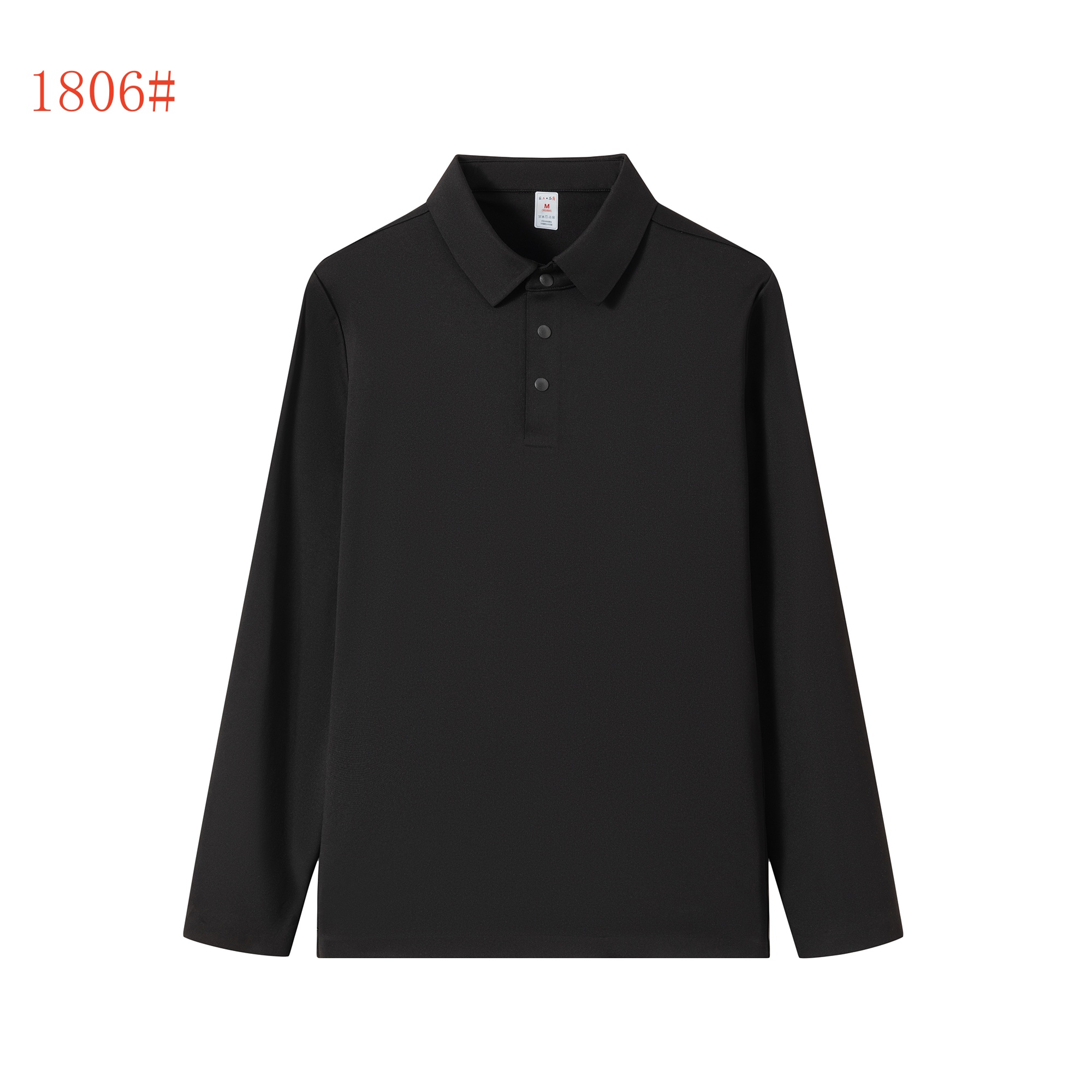
| 1806 | 3-snap placket | Set-in | Structured fold-over | Corporate, smart casual |
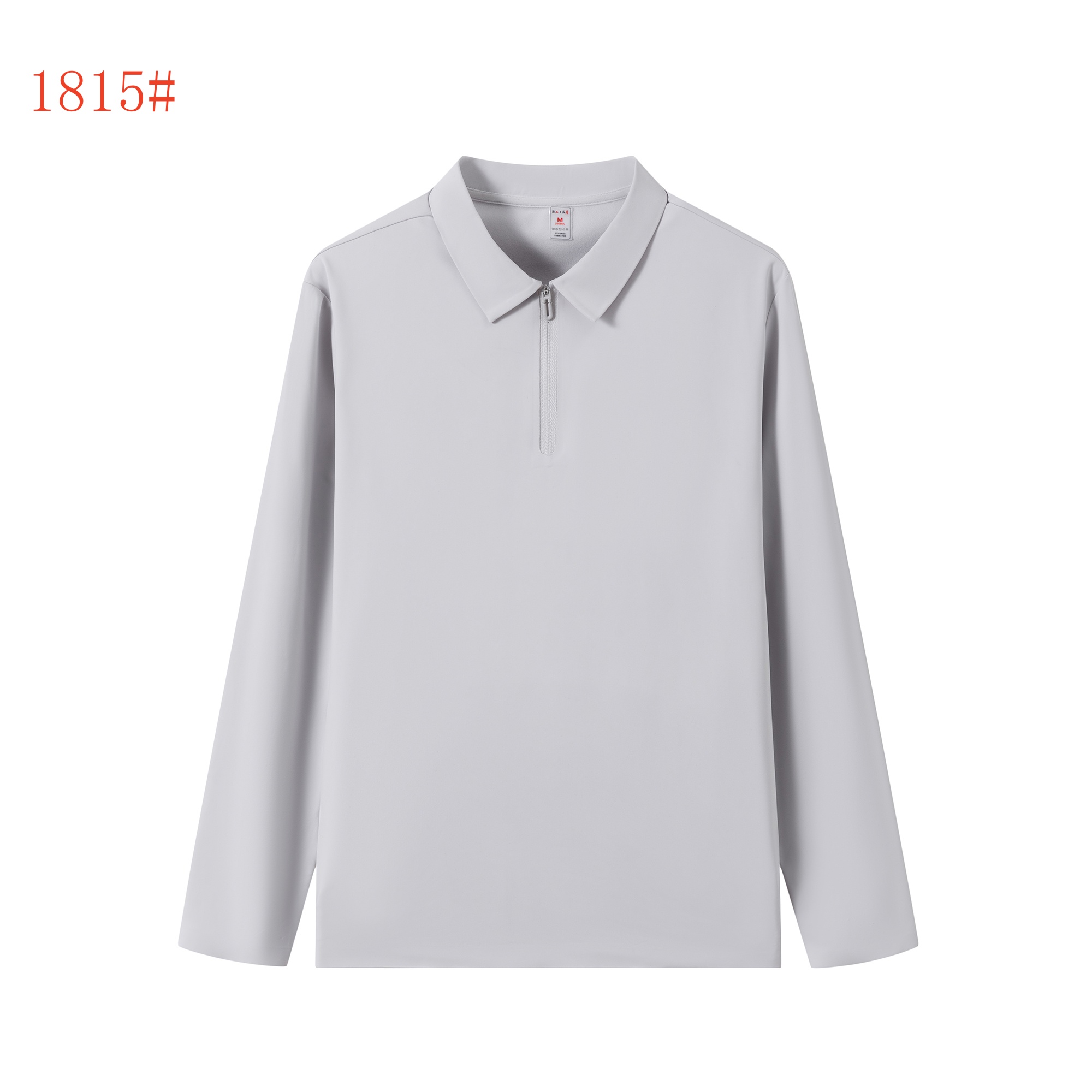
| 1815 | Quarter zip | Set-in | Notch lapel | Golf, uniform, retail |
The men's raglan long sleeve polo shirts in style 1801 use a covered three-snap placket and a curved raglan shoulder seam. The covered placket is the detail that makes it usable for sport: there is no visible button line to distort a print and nothing to catch on a swing.
The men's long sleeve snap placket polo shirts in style 1806 take the same three-snap closure and pair it with a set-in sleeve and a sharper shoulder line. This is the version a corporate buyer usually chooses, because a set-in shoulder photographs as a shirt rather than as sportswear.
The zipper polo long sleeve shirts in style 1815 replace the placket with a low-profile quarter zip and a notch lapel. It sits between a polo and a quarter-zip pullover, which is why golf collections and uniform programmes both use it: the collar opens for ventilation and closes into a clean neckline for a photograph.
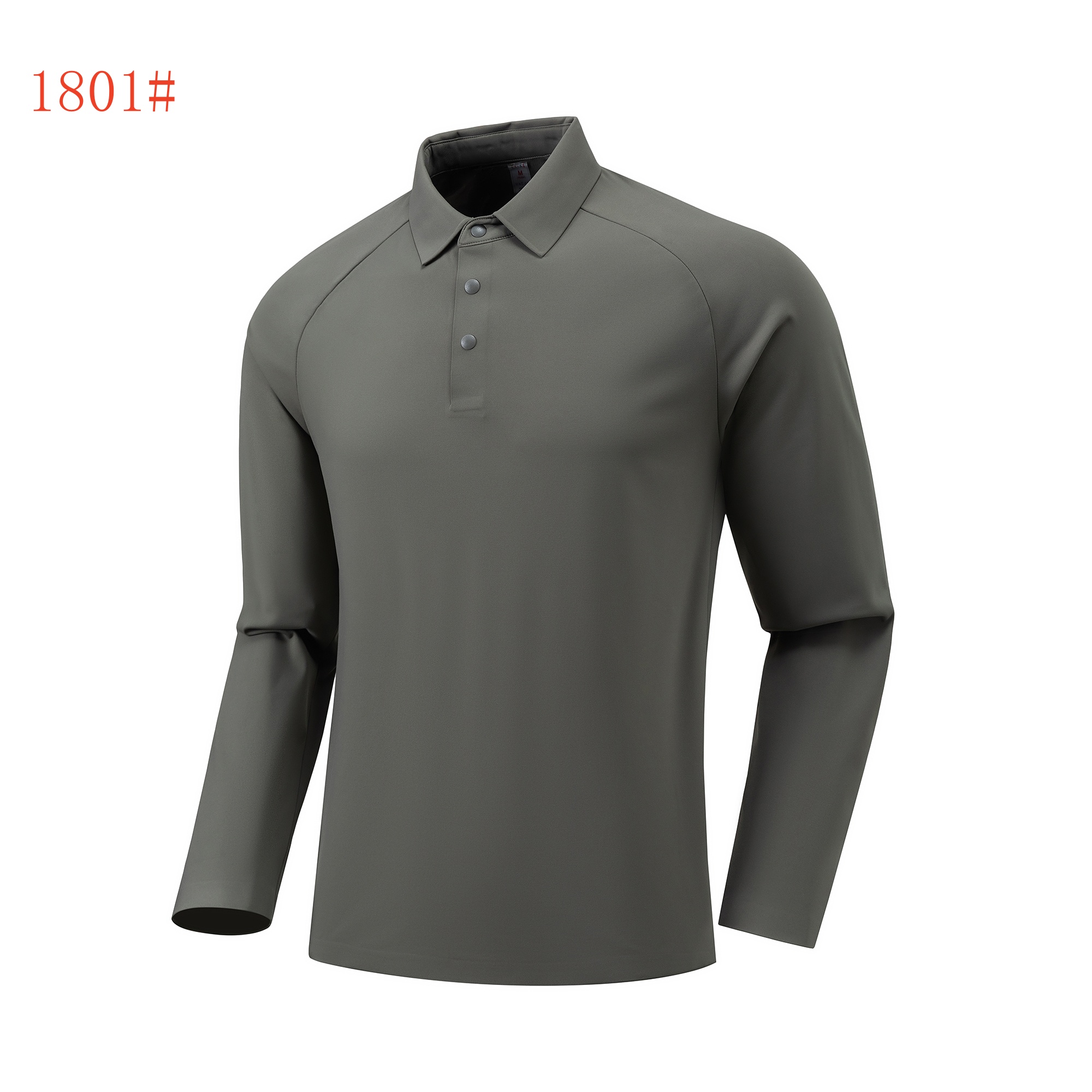
The collar is what fails first
A polo collar has to stand up on its own, fold flat when open and return to shape after washing. Three construction decisions determine whether it does.
The first is the interlining. A soft fusible gives the collar body without making it rigid; an unfused self-fabric collar looks correct on a hanger and collapses after two washes. On the styles here the collar carries stay stitching at the edge to hold the fold line, which is what keeps the points level rather than curling.
The second is the collar band length relative to the neck opening. If the band is cut too long, the collar stands away from the neck at the front; too short and it pulls the placket open. This is a pattern measurement, not a sewing one, so it cannot be corrected at the machine.
The third is the seam that joins collar to body. On a raglan style that seam meets the shoulder seam at an angle and takes more strain, so it is usually taped or top-stitched. On a set-in style the load is spread and a plain seam is sufficient.
The notch lapel on 1815 is a different construction again. The notch is cut so the collar sits flat against the neck when the zip is closed, and it only works if the zip tape stops below the notch point. Set the zip too high and the notch gapes.
Raglan or set-in: what changes in wear
A raglan seam removes the shoulder seam and gives the arm a wider arc before the fabric pulls. For golf and racket sports this is the practical choice, because the garment does not ride up across the back at the top of a swing. The visual trade-off is a softer shoulder, which is why teamwear and active brands accept it and corporate buyers often do not.
A set-in sleeve produces a defined shoulder and a tidier line under a jacket. To keep the same freedom of movement it needs slightly more ease at the chest, so an identical nominal size will feel roomier through the body. Buyers comparing the two on paper should compare the chest half-measure, not the size label.
Cuffs follow the same logic. An open hem with a clean twin-needle finish reads as a shirt; a ribbed cuff reads as a sweatshirt. On 1801 and 1806 the sleeve ends in a plain hem, which is what allows the garment to be worn under a blazer without a visible cuff ridge.
Choosing the knit
The placket decides the market; the knit decides the price and the season. Four options cover most orders.
High-gauge stretch piqué is the conventional polo fabric: a small, even surface texture, good recovery and a dry hand. It takes embroidery cleanly and reads as a shirt at close range. Moisture-wicking polyester-spandex is the performance option, with a smoother face and a faster dry time, better suited to golf and outdoor uniform programmes than to retail fashion.
Nylon blends give a silkier drape and a slightly cooler touch, which suits premium corporate gifting. Combed cotton blends give the softest hand and the most conventional look, at the cost of a slower dry time and less shape retention in the collar.
Weight is quoted in GSM and should be specified per colour, because a white polo at the light end of a range can appear thinner than the black beside it on the same shelf.
Trims, colour and decoration
Snap fasteners are the trim that buyers most often leave unspecified, and the default is rarely the best choice. Matte plastic reads as sportswear; dyed-to-match metal reads as premium; rubberised snaps suit outdoor and workwear programmes because they do not heat up or scratch. On the zip style, the pull and the tape colour are separate decisions, and a self-colour tape with a metal pull is the combination that photographs best.
Pantone matching applies to the fabric, the snaps, the zip tape and the thread. On a dark navy or a black, thread that is one shade off is visible on every seam, so the thread is usually matched to the fabric rather than to the trim.
Decoration is straightforward on these styles. High-density chest embroidery holds its shape on piqué and on stretch knits with a backing; matte silicone transfer suits small logos and reflective accents on the placket; screen print works best on the smoother performance faces. Heat-seal neck labels, woven side-seam tags, hangtags and branded polybags are available on custom runs, and because they are attached during finishing they must be confirmed before production rather than before shipment.

Sampling, minimums and the size run
Samples are produced in 5 to 7 working days after the tech pack is confirmed. Bulk production runs 15 to 25 days once the sample is approved and the fabric is in house. Custom orders start at 200 pieces per style and per colour; stock colours can be mixed below that and dispatched within three days from the 5,000 square metre warehouse.
The size run needs one decision that is easy to postpone and expensive to get wrong: whether the polo is worn alone or under a jacket. Worn alone, the chest half-measure should sit close; worn under a jacket, it needs one size of ease or the sleeve head will bind at the armhole. This is a fit decision rather than a grading one, so it is settled at the sample stage or not at all.
Quality inspection follows the AQL standard across the lot, with manual checks on collar symmetry, placket alignment, snap security, side-seam contour and dimensional consistency. Buyers with their own inspection process can arrange a third-party audit at the factory before packing.
Questions buyers ask before ordering
Can the snap placket be changed to a button placket?
Yes, on a custom run. It changes the placket pattern, the interlining and the finishing time, so it is quoted as a modification rather than as a trim swap. Snap closures are usually chosen because they eliminate the buttonhole line that distorts a chest print.
Which style works best for a corporate uniform?
Style 1806, in a dark core shade with a tonal embroidered logo. The set-in shoulder and structured collar read as business casual, and there is no zip to inspect or replace in service.
Is the quarter zip suitable for a warm climate?
Yes, provided the knit is the performance option rather than a cotton blend. The zip gives ventilation at the neck, which a buttoned placket cannot match, but the fabric still has to be able to move moisture for the garment to be comfortable outdoors.
For a range that has to cover both sport and office, the usual structure is one raglan style for teamwear and golf, one set-in style for corporate, and the quarter zip as the bridge between them, all in matching core shades so the three read as one collection. The full range, including the short sleeve and performance options, sits under custom polo shirts, and the factory can quote a mixed order once the size breakdown, knit and decoration method are fixed.
Share to:


