Hoodie Closure Styles: Pullover, Quarter-Zip and Button-Up
How the three hoodie entry systems are engineered for wholesale: pullover crew necks, quarter-zip plackets, and Henley button fronts, hood architecture, hardware, and the 200-piece production minimum.
2026/11/18
Reading volume: 0
News Details
A hoodie is defined by the way the wearer gets into it, not by the hood. Two garments can share the same 360 g cotton-poly body, the same double-layer hood and the same kangaroo pocket, and still belong to different markets because one closes with a quarter zip, one closes with three buttons, and one does not close at all.
This guide compares the three entry systems stocked in our Guangzhou range, explains what each one does to sizing, decoration and factory handling, and sets out the order details worth settling before a 200-piece run. It is written for buyers sourcing custom hoodies for men who need to decide between a pullover, a quarter zip and a button placket rather than between logos.
Three ways in, three different garments
The placket is the first thing a customer touches and the first thing a factory has to get right, because every opening in a knit body concentrates strain at its ends.
| Style | Entry | Neckline | Best for | |
|---|---|---|---|---|
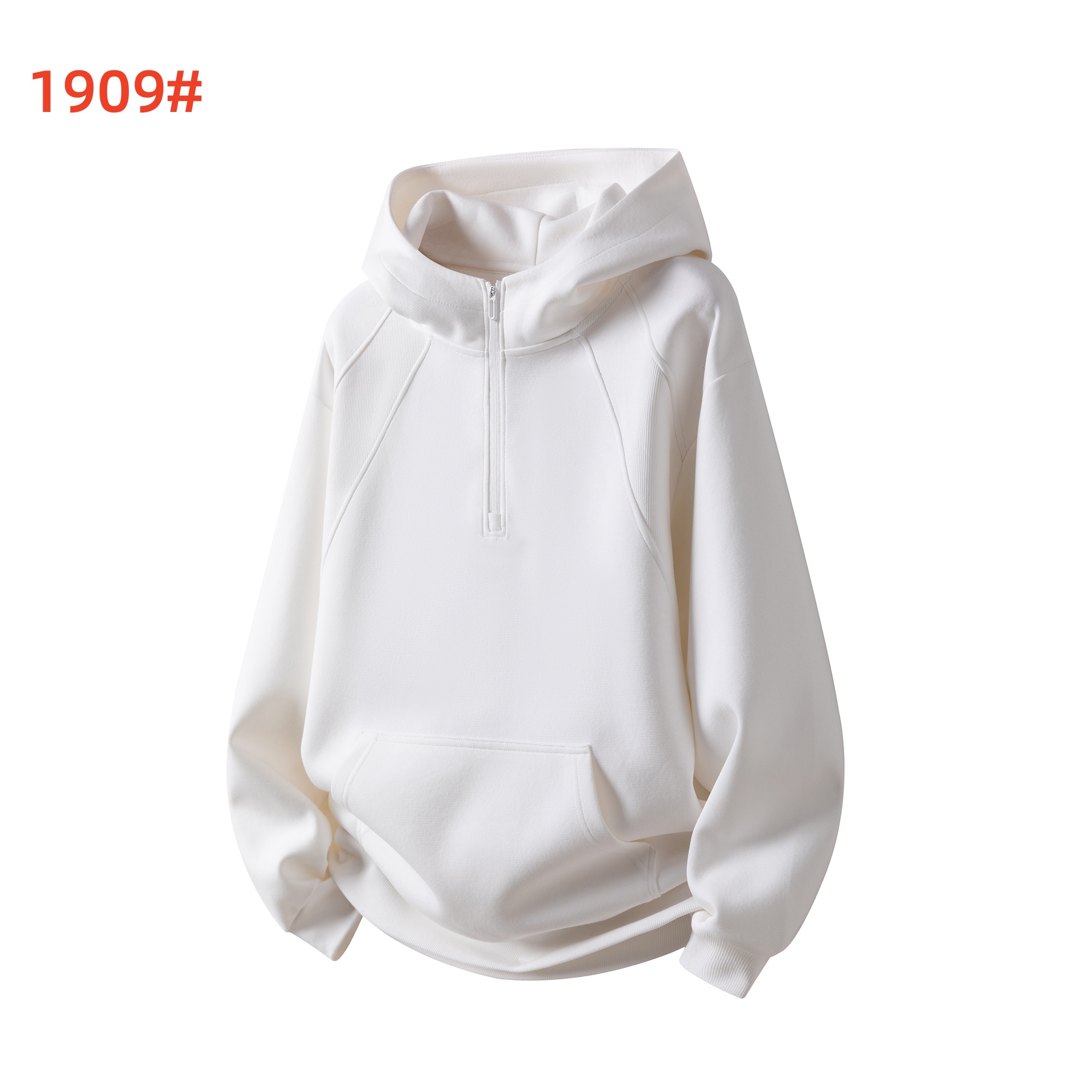
| 1909 | Quarter zip | High collar feeding into a double-layer hood | Kangaroo | Streetwear, athleisure, outer layer |
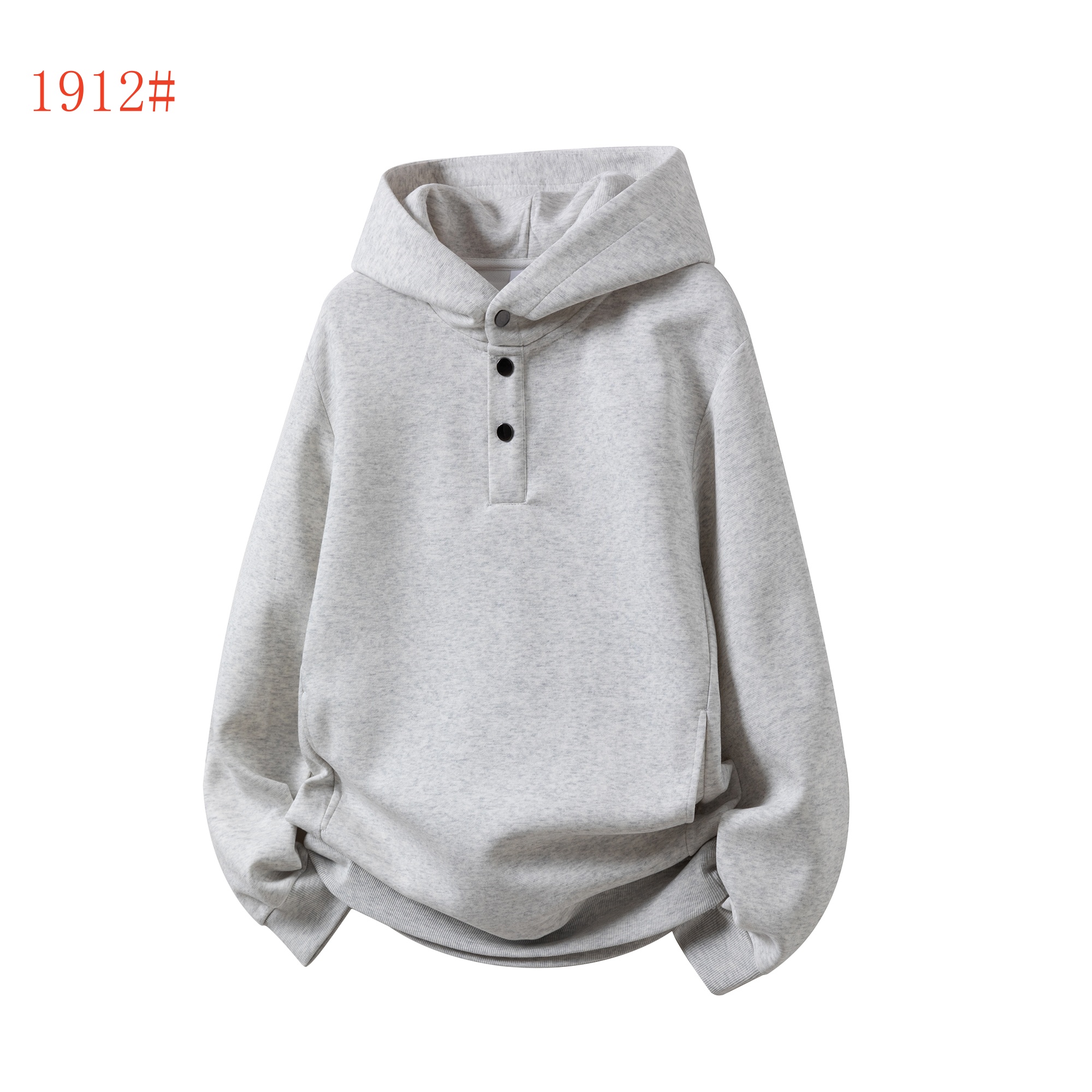
| 1912 | Three-button Henley placket | Oversized structured hood | Concealed side pockets | Premium retail, boutique labels |
| Pullover | None | Ribbed opening under the hood | Kangaroo | Volume blanks, teamwear, promo |
The custom quarter-zip fleece hoodies in style 1909 combine a half zip with a high-neck hood, ergonomic raglan sleeves and sweeping curved side panels. The zip runs from the collar seam into the hood opening, which means the wearer can ventilate without pulling the hem up, and the garment reads as outerwear in a photograph even when it is worn open.
The mountain cotton button-up hoodie in style 1912 takes the opposite route: a three-button Henley placket set into a 360 g mountain cotton body, an oversized structured hood, and side pockets cut into the seam so the front stays clean. It is the version that sells to labels who want a hoodie that does not look like sportswear.
A plain pullover is the volume product. On the custom hoodies and sweatshirts range it is built with a double-layered lined hood, adjustable drawstrings with finished metal aglets, a reinforced kangaroo pocket and double-needle stitching at the neckline, armholes and pocket edges, in a 63.5% cotton / 36.5% polyester mountain cotton body from M to 4XL.
What the opening does to the pattern
Every entry system removes fabric from the front of the body, and the pattern has to compensate somewhere. Add a quarter zip and the front panel is split into two pieces joined by a placket, which means the placket has to be interfaced or the knit will pucker along its length. Add three buttons and the placket becomes a faced strip with buttonholes, and the buttonholes have to be reinforced because they take the load every time the garment is pulled over the head. A pullover avoids both problems and creates one of its own: the neck opening has to be wide enough to pass a head without stretching the rib, which is why pullover hoodies use a taller, softer rib than a crewneck sweatshirt.
The practical consequence is that a pullover and a quarter zip cannot share a single front pattern. Buyers who want both in one collection should expect two patterns, two samples and two sets of grade rules, even when the fabric and the colour are identical.
Hood structure is where the weight sits
A single-layer hood collapses forward and shows the inside of the fabric at the front edge. A double-layer hood holds its shape when worn down, keeps a clean line in a product photo, and adds roughly the fabric of a second hood to the consumption. On the 1912 the hood rim is double-ply for exactly this reason, and the same construction appears on the pullover styles.
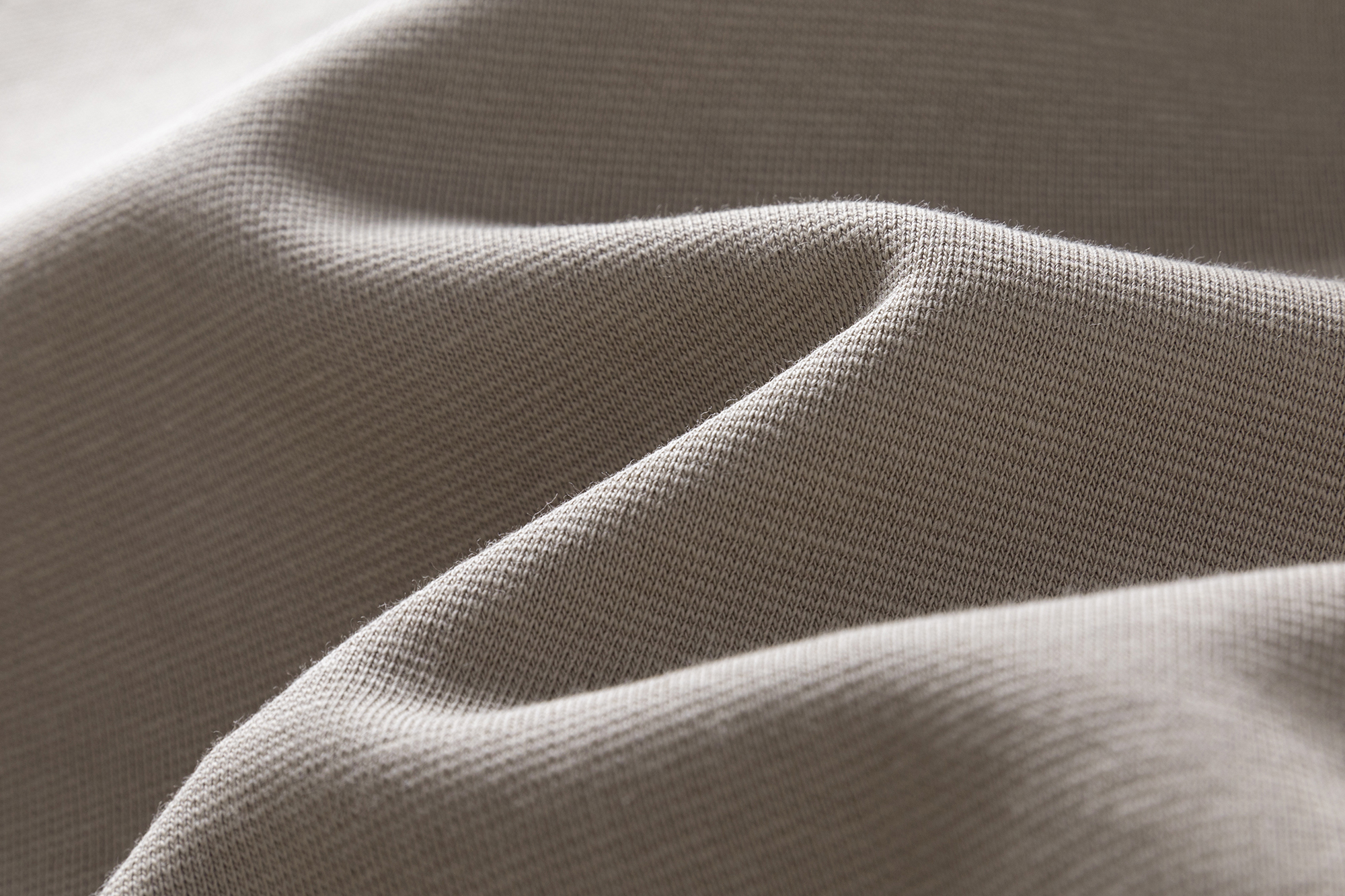
Weight interacts with that decision. A 360 g mountain cotton body can carry a structured hood without the garment looking top-heavy; a 280 g body with the same hood reads unbalanced and pulls at the shoulders. If a buyer wants to reduce cost by dropping the weight, the hood construction should be reviewed at the same time rather than afterwards.
Hardware decisions that repeat on every unit
Quarter zips live or die on the slider. A semi-auto lock slider stays where the wearer leaves it; a plain auto-lock drifts down during wear and a cheap open slider does both. On custom runs the slider, the puller and the tape colour are three separate specifications, and dyed-to-match tape with a metal pull is the combination that photographs best on a dark body.
Buttons are simpler but not free of risk. On a 360 g knit a plastic button with a moulded shank sits flatter than a sew-through button, and it survives commercial laundering better because there is no thread to abrade. Snap fasteners are the alternative, and rubberised snaps suit outdoor programmes because they do not heat up against the chest. Whichever is chosen, button security is a line-check item, and it is one of the faults an AQL inspection is designed to catch before packing.
Decoration around an opening
The front of a hoodie is a print area interrupted by a placket, a pocket and a hood edge, so placement is a design decision rather than an afterthought. On the quarter zip, a centred chest logo has to sit below the bottom stop; above it, the embroidery hoop fouls the zip tape. On the button style, the placket splits the chest into two narrow fields, which is why the 1912 is usually decorated with a left-chest embroidery or a sleeve print rather than a full-width graphic.
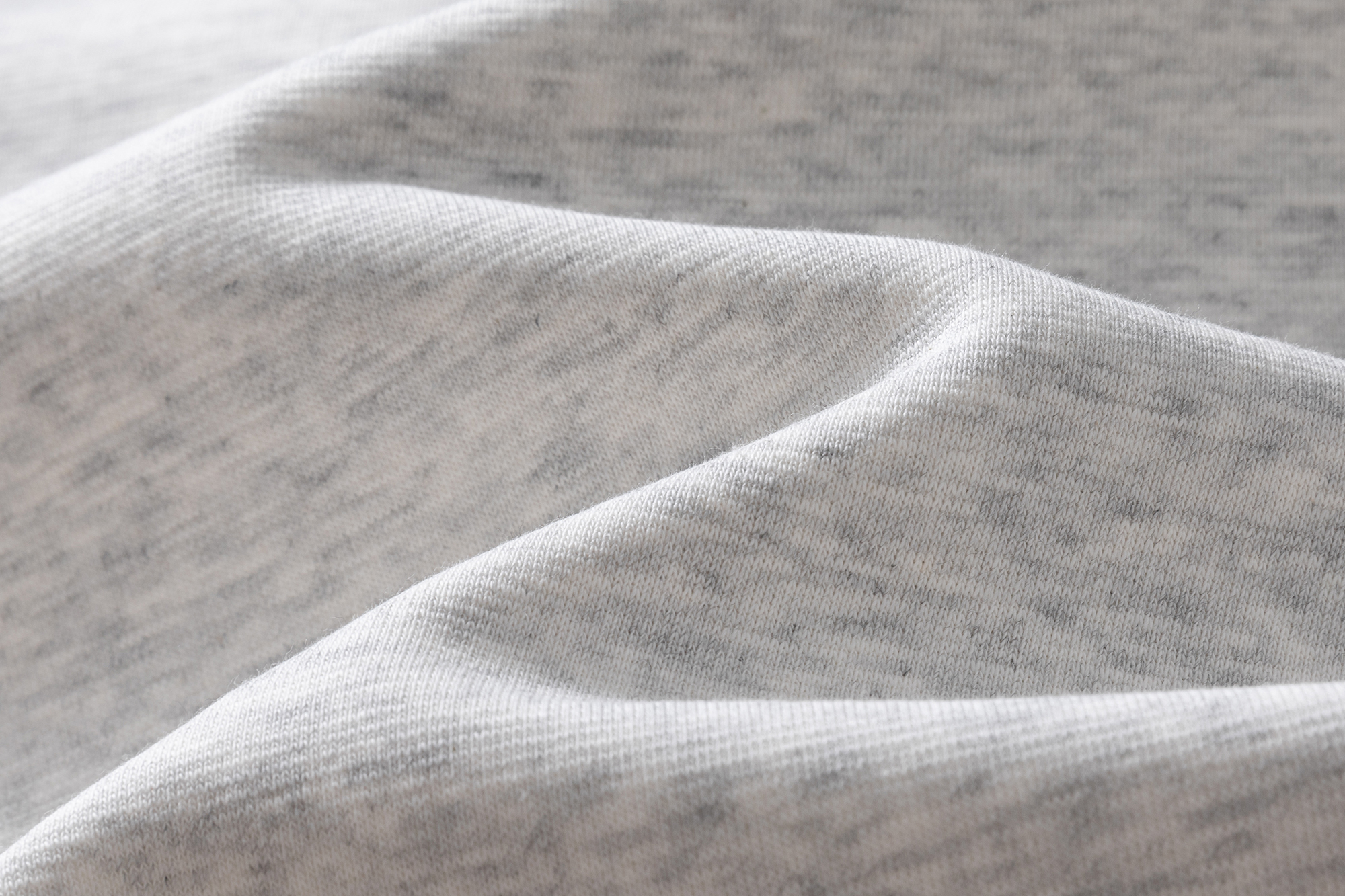
The fabric face matters too. Mountain cotton has a tight, smooth surface that takes high-density screen print, puff ink, silicone transfer and DTG cleanly. On a brushed interior the outer face is still printable, but heavy plastisol applied across a seam will crack at the seam line, so large graphics are usually broken by the pocket opening rather than printed over it.
Sizing, stock and the 200-piece minimum
The hooded styles run from M to 4XL in stock colours, which covers most European and American size curves without a special grade. Buyers who need XS or 5XL should raise it before sampling, because an extra size at either end is a new pattern rather than a line added to the chart.
Stock blanks ship within three days from the 5,000 square metre warehouse, and starter orders can begin at ten pieces, which is the usual way to test a colour before committing. Custom orders start at 200 pieces per style and per colour, with sampling in 5 to 7 working days and bulk production in 15 to 25 days once the sample is approved and the fabric is in house. Custom dyeing is quoted against a Pantone reference and sits inside that lead time, so colour approval has to happen before the fabric is ordered.
Questions buyers ask before ordering
Can a pullover be converted into a quarter zip?
Not by adding a zip. The front panel has to be split, the placket faced and the hood opening re-cut, so it is a new pattern and a new sample. The same applies in reverse.
Which style is easiest for a first order?
The pullover, because there is no hardware to specify and no placket to inspect. The quarter zip is the better second step once the fit is proven, since it carries a higher unit price in most markets.
Does the button placket cost more than a zip?
It depends on the button and the facing rather than on the closure type. A faced placket with three moulded buttons and bar-tacked ends is comparable to a short zip with a semi-auto slider; the difference appears when a buyer specifies metal hardware or a branded puller.
For a range that has to cover several price points, the workable structure is a pullover as the volume blank, a quarter zip as the technical layer and the button style as the fashion piece, all cut from the same mountain cotton so the colours match across the collection. Specifications and stock status for each are listed on the product pages, and the factory can quote a mixed order once the size breakdown and decoration method are fixed.
Share to:


