Seamless Roma Cotton T-Shirts: 220g, Bonded Seams and 7A Antibacterial
How the 220g seamless Roma cotton T-shirt is built: bonded and taped seams, 45S double-ply cross-knit, liquid ammonia finish, the 7A antibacterial claim, stock colours and bulk minimums.
2026/11/18
Reading volume: 0
News Details
“Seamless” is one of the most misused words in T-shirt specifications. On a knitted undershirt it can mean a circular machine that produces a tube with no side seams at all. On a 220 g Roma cotton tee it usually means something narrower and more practical: the side seams are bonded and taped instead of being sewn and overlocked, so nothing presses against the ribs. Buyers who assume the stronger definition end up disappointed at the sample stage.
This guide explains how the 220 g seamless Roma cotton tee in our range is actually built, what the 7A antibacterial claim covers, why the liquid ammonia finish changes the hand feel, and the order details that matter before a bulk run. It is written for buyers sourcing seamless t shirts for premium boutiques, lifestyle labels and distributor programmes that need a blank with a story.
What the fabric is, exactly
The body is a 63.6% cotton / 36.4% polyester blend knitted from 45S double-ply yarn in a cross-knit structure, at 220 g. That combination is not accidental. Double-ply yarn resists the slubs and thin spots that single-ply cotton shows after ten washes, and the cross-knit geometry gives the face a dense, opaque surface without adding weight.
The polyester share does the structural work: it holds the shape at the shoulder and the hem, reduces the pilling that a soft cotton face develops under a bag strap, and keeps the garment from growing during commercial laundering. A 100% cotton version of the same weight feels better on the first wear and loses its line by the tenth.
The cut is a modern relaxed drop shoulder. On a 220 g body that matters, because a drop shoulder on a light fabric looks like a sizing error while the same seam on a dense knit reads as a deliberate silhouette.
| Specification | Detail | Why it matters |
|---|---|---|
| Composition | 63.6% cotton / 36.4% polyester | Shape retention without losing the cotton hand |
| Yarn and knit | 45S double-ply, cross-knit | Dense, opaque face; resists slubs and thin spots |
| Weight | 220 g | Heavy enough to hold a boxy line, light enough for summer retail |
| Seam finish | Bonded and taped, no overlock ridge | Flat interior, uninterrupted print area |
| Finish | Liquid ammonia | Silkier hand, deeper colour, less first-wash shrinkage |
| Size and colour | M–4XL, five stock shades | Covers standard retail curves without a special grade |
The seam that gives the name
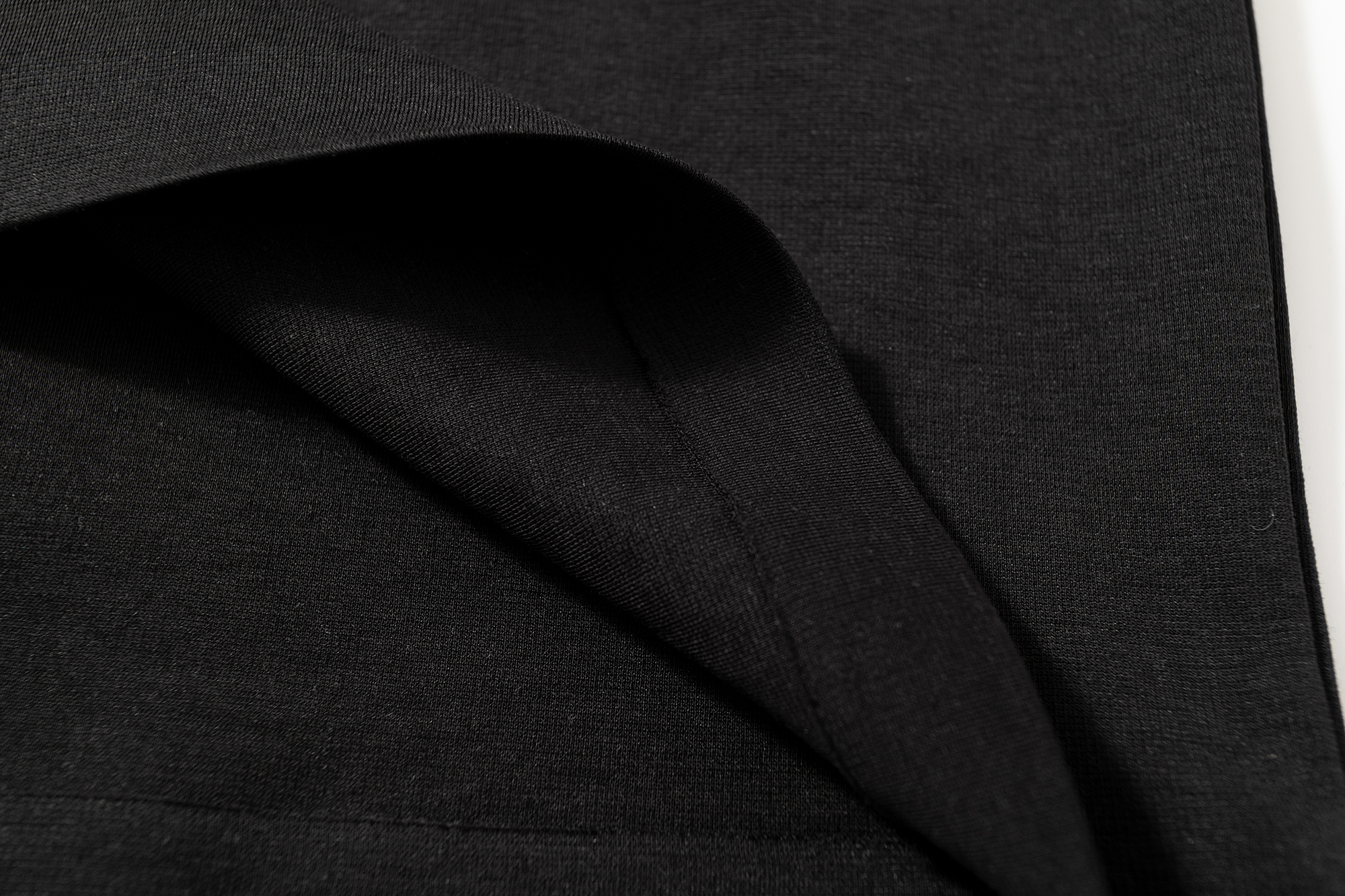
On a conventional tee the side seam is sewn, overlocked and pressed. The result is a raised ridge of thread and folded fabric running from the armhole to the hem, and on a fitted garment that ridge is exactly where a wearer notices it. The seamless construction replaces it with bonded taping: a flat tape is heat-bonded over the join, so the interior is smooth to the touch and the exterior shows a flat, low-profile line.
Bonding is not automatically better than sewing. A bonded seam depends on the tape, the temperature and the dwell time of the press, and a badly bonded seam fails suddenly rather than gradually. That is why the specification has to include a wash test — the bonded tape should survive repeated industrial laundering without lifting at the armhole, which is the point of highest movement. On this style the taping is checked for bonding stability as part of the AQL inspection, alongside seam strength and dimensional accuracy.
The practical advantage for a brand is visible in two places: the drape, because there is no seam ridge interrupting the fall of the fabric, and the print area, because a full-width back graphic runs across a flat surface rather than over a seam.
The liquid ammonia finish
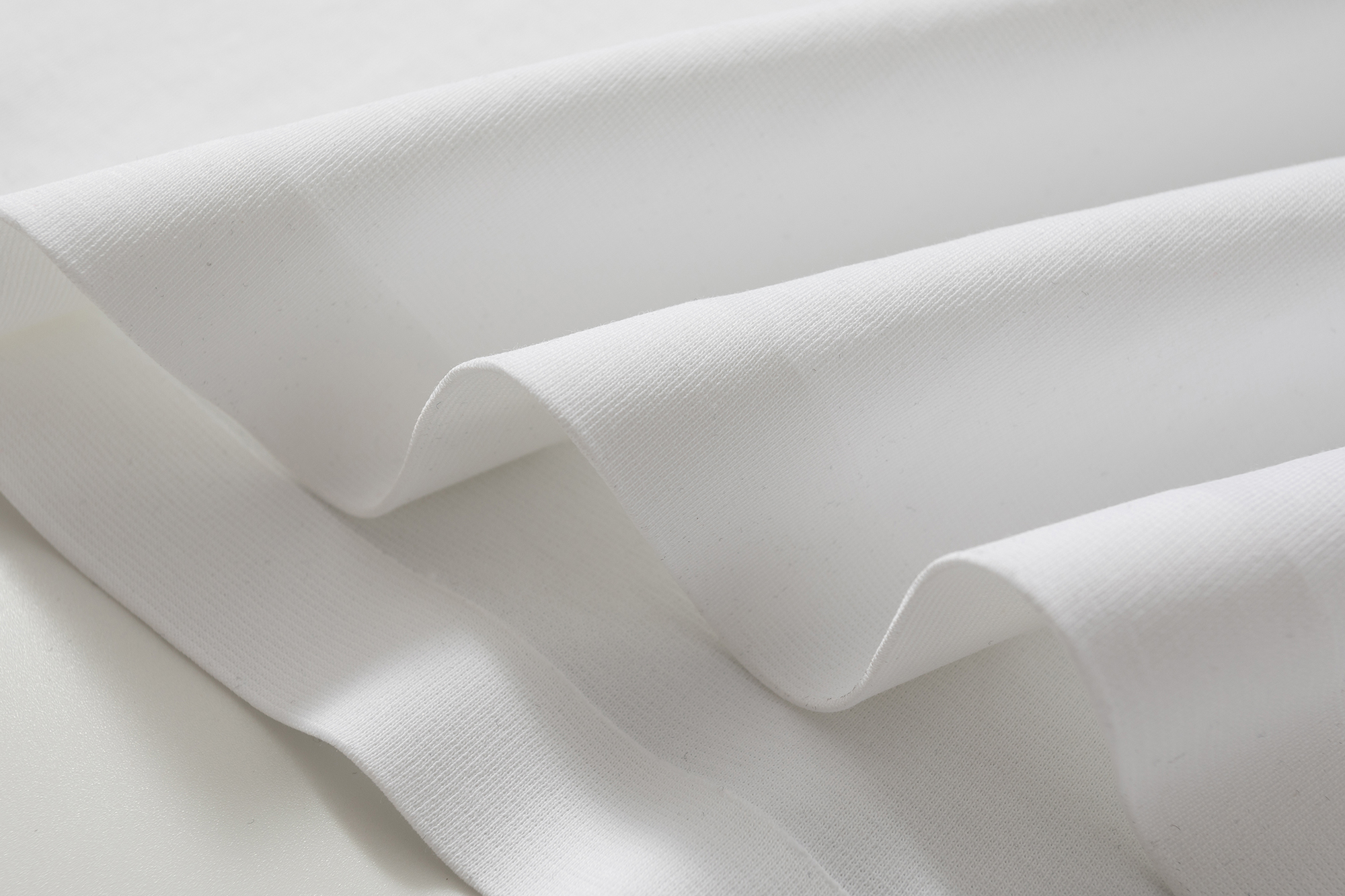
Liquid ammonia treatment is a finishing process applied to cotton yarn or fabric under tension. It swells the fibre, relaxes the internal stress left by spinning, and produces a smoother, more lustrous surface with better dimensional stability than a conventional mercerised finish. In practice a buyer notices three things: the fabric feels silkier than its cotton content suggests, the colour looks deeper on a dark shade, and the garment shrinks less on the first wash.
It is a real process with a real cost, and it is also the reason the face of this tee takes decoration so cleanly. A smooth, low-friction surface lets a silicone transfer sit flat and lets fine embroidery stay crisp, where a slubbier cotton face would show the texture through both.
What the 7A antibacterial claim actually covers
The fabric carries a 7A-level physical antimicrobial treatment, described by the mill as chemical-free, effective against the targeted organisms for up to seven consecutive days of wear, and verified across 150 industrial wash cycles. It is also listed as anti-dust-mite, anti-mould and deodorising.
Two cautions belong in any catalogue copy built on that claim. First, “physical” antimicrobial means the fibre structure or a bound agent inhibits microbial growth rather than releasing a biocide into the wash water; that is why the effect is described as durable rather than as a coating. Second, any specific performance figure printed on packaging or in a listing should be backed by the test report for the actual production lot, because a mill’s generic claim is not the same document as a test on your fabric.
What the finish does not do is replace laundering. A tee that is worn for a week in a humid market will still need washing; the treatment slows odour development between washes rather than eliminating the need for them. Saying so plainly protects the brand from the one complaint that always follows an overstated claim.
Five colours, one size run
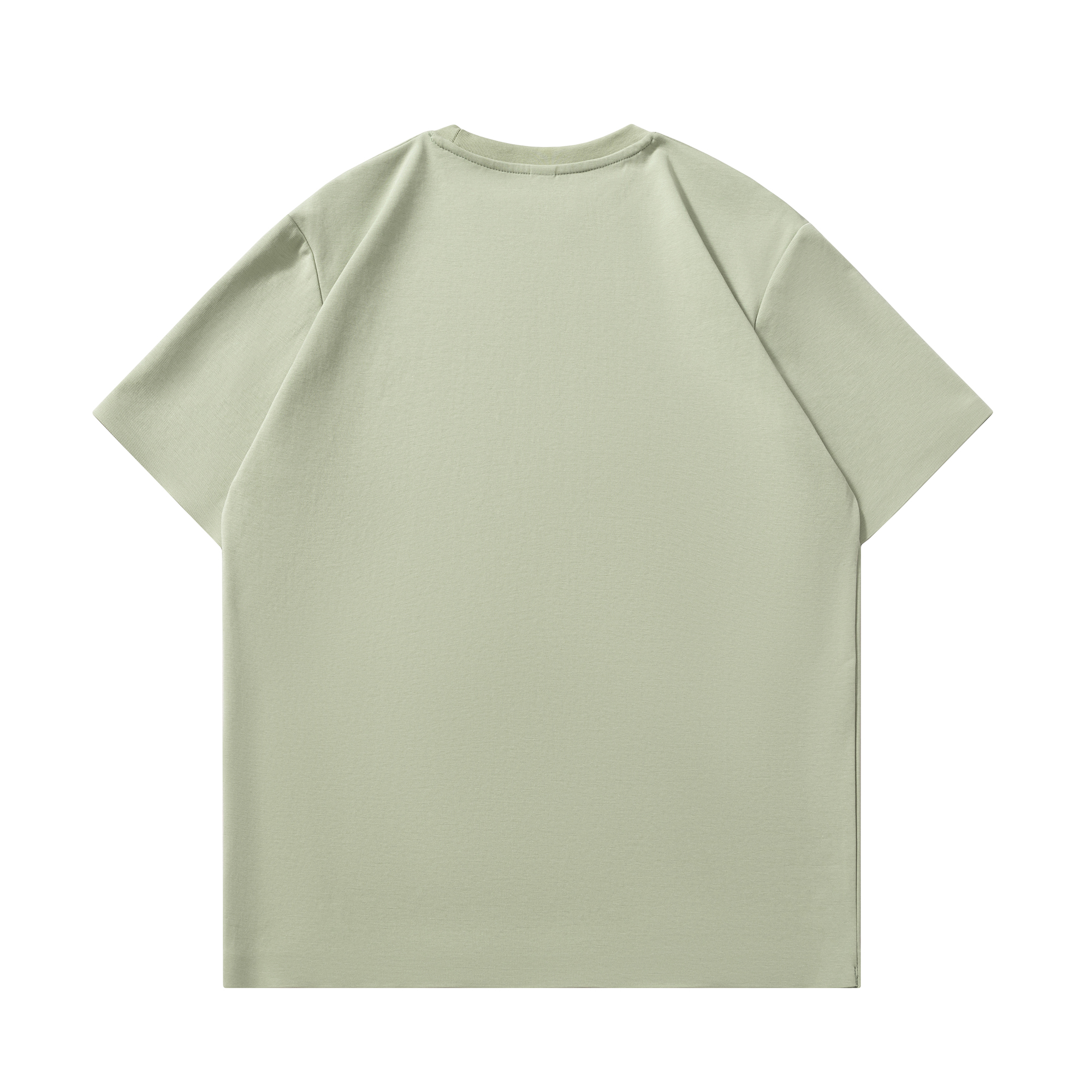
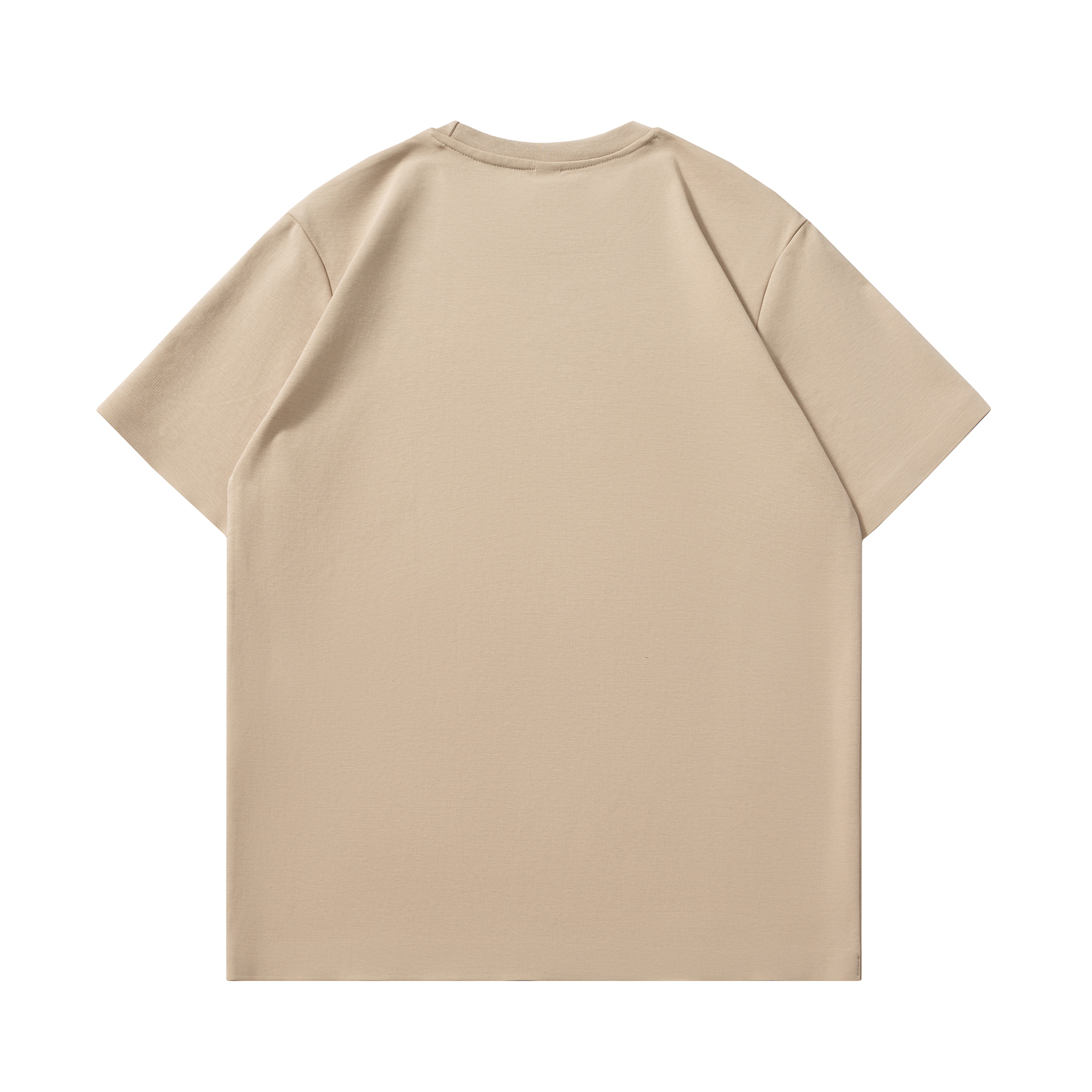
The style is stocked in black, white, off-white, light sage green and coffee, from M to 4XL. That colour set is deliberate: three neutrals carry a logo without competing with it, and the two tinted shades give a retail buyer a reason to place a second order.
The bulk programme behind these shades is set out on the wholesale 220 g seamless antibacterial Roma cotton T-shirt page: stock can be mixed at low volume and dispatched within three days from the 5,000 square metre warehouse. Custom orders start at 200 pieces per style and per colour, with sampling in 5 to 7 working days and bulk production in 15 to 25 days after approval. On a 63.6/36.4 blend, lab dips have to be approved on the actual blend rather than on a cotton swatch, because the polyester share takes dye differently and a shade that matches on cotton will read cooler on the finished garment.
Decoration: why the smooth face matters
DTG printing, high-density screen print, silicone heat transfer and fine embroidery all behave well on this surface. DTG is the practical choice for short runs and photographic graphics, because there is no screen cost and the ink bonds into the smooth face rather than sitting on top of a texture. Screen print is cheaper per unit at volume and gives a more opaque result on dark shades.
Embroidery is where the bonded construction earns its place: a left-chest logo stitched across a flat seam area sits level, whereas the same logo on an overlocked side seam can cup. On the back, a large application should stay clear of the shoulder yoke by a couple of centimetres, because the fabric stretches across that panel when the garment is pulled on.
Heat-seal neck labels, printed inner care tapes, woven hem tags, hangtags and branded polybags are all available on custom runs. Because they are attached during finishing, they have to be confirmed before production rather than before shipment.
Questions buyers ask before ordering
Is this really seamless?
No garment of this type is knitted in one piece. The body is cut and joined, then the joins are bonded and taped rather than sewn and overlocked. The claim describes the seam finish, not a completely unseamed garment, and it should be described that way in retail copy.
Does the antibacterial finish wash out?
It is specified as durable across 150 industrial wash cycles, which is well beyond normal retail use. It is not permanent, and it does not remove the need to launder the garment.
Can we order a custom colour below 200 pieces?
No. Custom dyeing is quoted from 200 pieces per colour, because the dye lot has to be run as a batch. Stock shades can be mixed at low volume, which is the usual route for a first order while the colour is being tested.
The case for this style is straightforward: it gives a brand a heavyweight-feeling cotton blank with a construction story that survives a customer turning it inside out. Buyers who want a lighter, cheaper blank for promotional work should look at the standard cotton range under custom T-shirt, and buyers who need the same body with a different finish can compare it against the custom 220 g seamless Roma cotton T-shirt page, which lists the full colour and trim matrix. Specifications and stock status are published there, and the factory can quote a mixed order once the size breakdown and decoration method are fixed.
Share to:


