Performance T-Shirts: Moisture Transport, UPF & Insect-Repellent Finishes
How quick-dry performance t-shirts are specified: polyester versus stretch knit, one-way moisture transport, sun protection and mosquito-repellent finishes, print methods.
2026/11/16
Reading volume: 1
News Details
Performance t-shirts are the easiest category to buy badly, because almost every supplier uses the same four words on the quote sheet and almost none of them mean the same thing. "Quick dry" can describe a knit structure, a surface treatment or a fibre choice, and the three behave differently after twenty washes.
This guide covers the two performance routes stocked in our Guangzhou warehouse, how the protective finishes are applied, what changes when you print on polyester, and the order details that decide whether a repeat purchase happens. It is aimed at buyers building sports clothing custom ranges or adding a functional line to an existing basics programme.
What "quick dry" actually describes
On a technical tee, drying speed comes from the fibre and the knit geometry rather than from a coating. Polyester does not absorb water into the fibre the way cotton does, so moisture sits on the surface and evaporates faster. A dual-surface knit goes one step further: the inner face is engineered to pull perspiration outward, and the outer face spreads it over a wider area so it dries sooner.
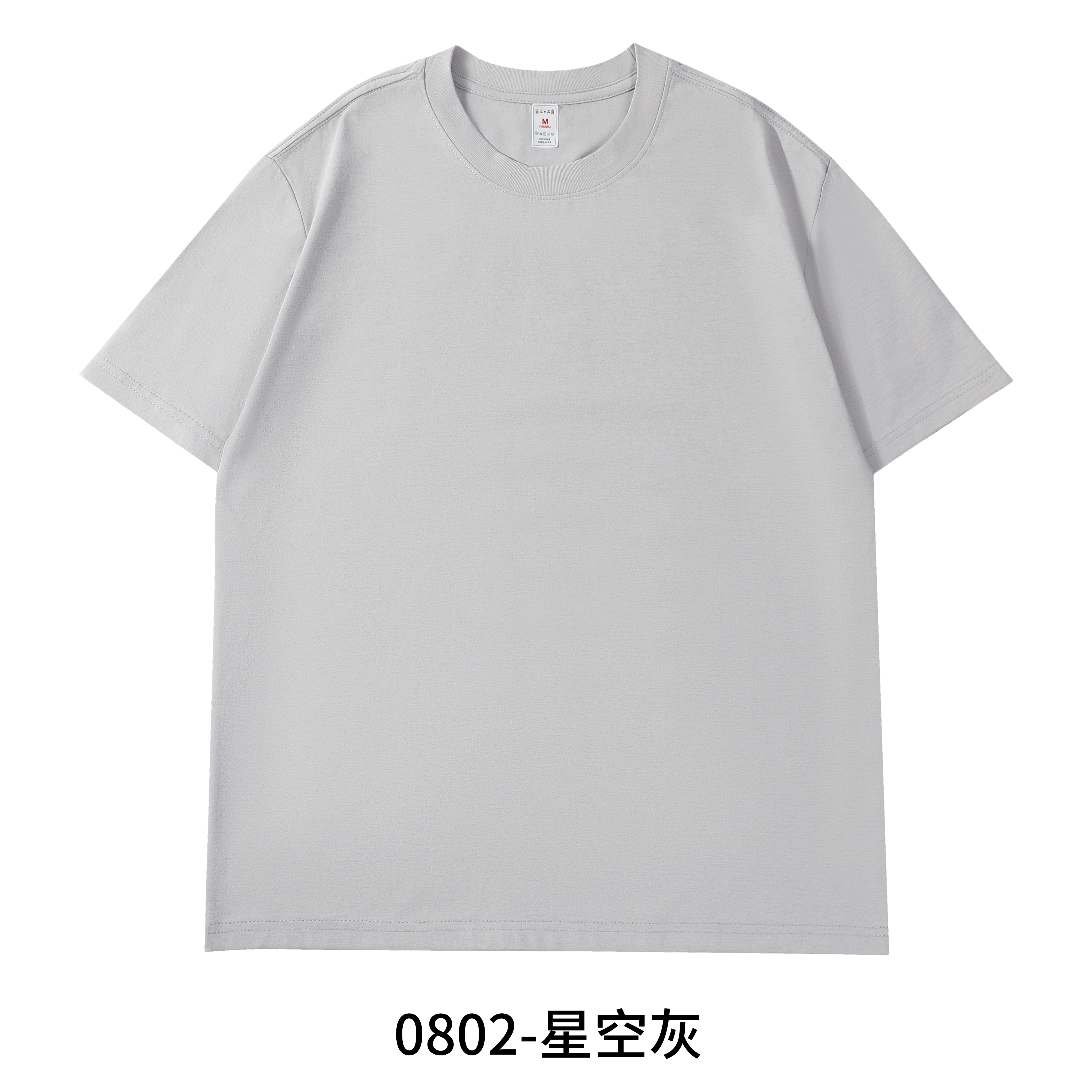
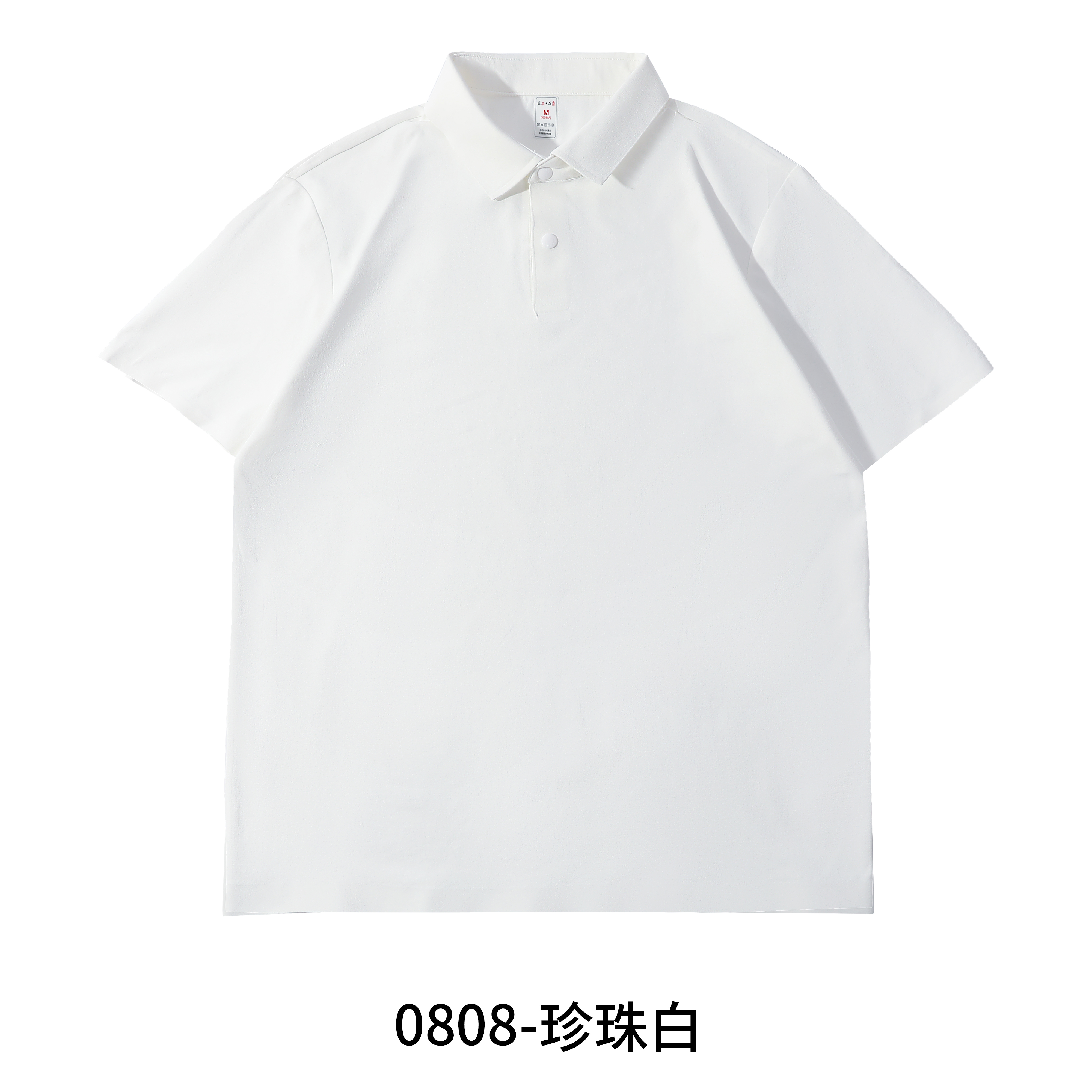
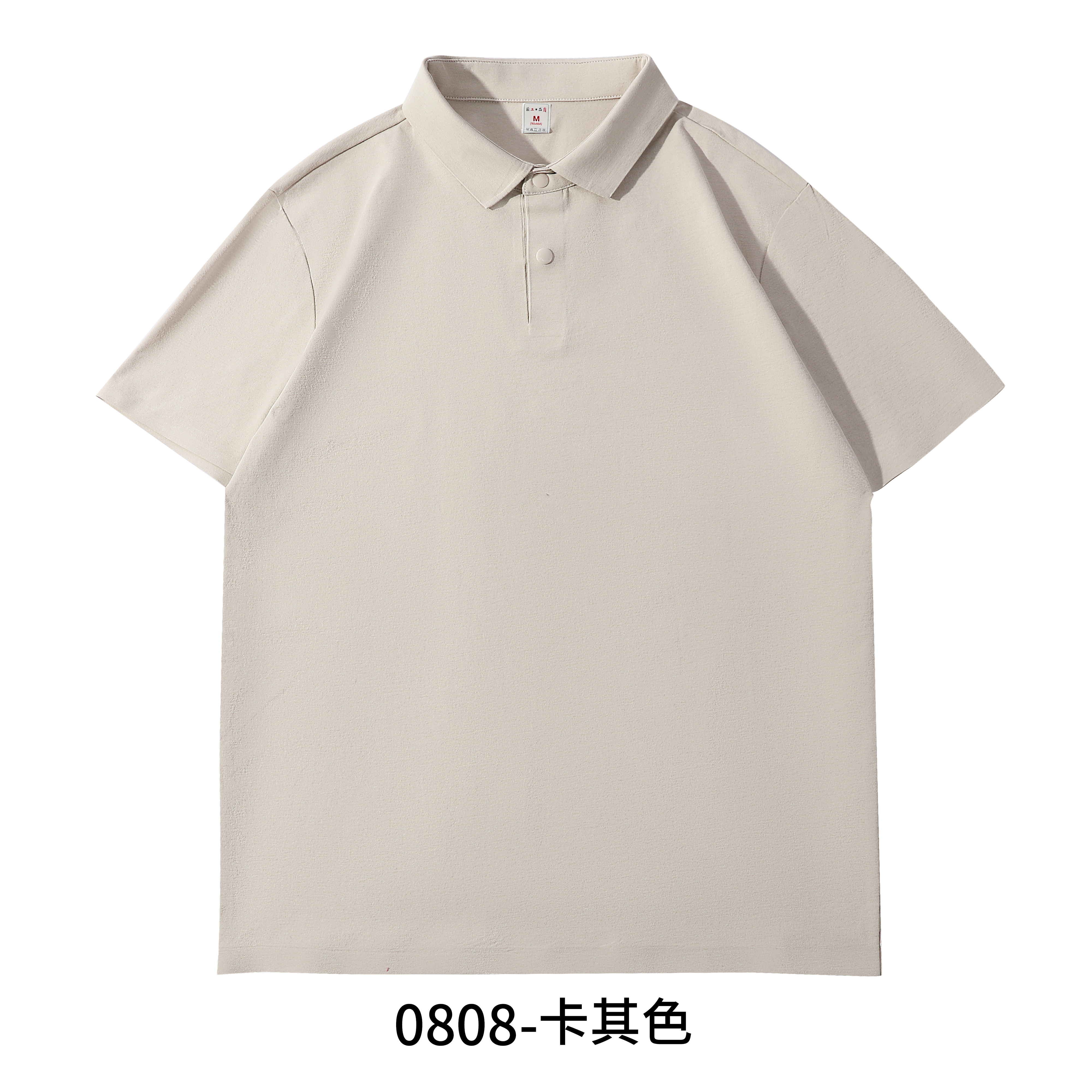
That is the mechanism behind the "one-way moisture transport" wording used on the collared style 0808, where the fabric is built as two surfaces rather than one. The crew style 0802 takes a simpler route: 100% technical polyester with a tight, stable weave that resists wrinkling and holds its shape in repeated washing.
What this does not mean is that the shirt stays cool in every condition. A quick-dry tee moves sweat; it does not lower skin temperature on its own. Buyers who need a cooling claim should treat it as a separate finish, described below, and not as a by-product of the fibre.
Two routes: crew versus collared
The choice between 0802 and 0808 is mostly about how the garment will be worn, not about which fabric is better.
| Specification | Style 0802 | Style 0808 |
|---|---|---|
| Fabric | 100% technical polyester | Comfort stretch knit, collared |
| Moisture behaviour | Wicking fibre, fast evaporation | Directional one-way transport |
| Neckline | Crew | Collar with button placket |
| Stock colours | 7 earth-toned shades | 5 neutral shades |
| Size range | M to 4XL | M to 4XL |
| Typical use | Outdoor, hiking, promotional | Corporate casual, uniform, resale |
The quick-dry outdoor sun protection t-shirts in style 0802 are the volume blank: a plain crew that takes a full-front print or a small chest logo without argument, and that a distributor can sell into outdoor retail, promo and workwear from one stock position. The quick-dry collared performance t-shirts in style 0808 sit one step up the formality ladder, which is why uniform suppliers and corporate programmes tend to prefer them: a collar photographs as workwear, a crew photographs as sportswear.
Sun protection and insect-repellent finishes
Both styles carry two protective features that buyers ask about most often, and both need to be described carefully in a catalogue.
Ultraviolet blocking comes from the density and structure of the knit as much as from any additive. A tighter, heavier polyester holds back more UV than an open mesh of the same fibre, which is why a lightweight "cooling" tee and a sun-protection tee are not automatically the same product. Where a UPF number is required on packaging or in a listing, it has to be tested on the finished fabric and the test report attached to the shipment; a generic claim from a supplier is not a substitute.
Mosquito repellent on these styles is a botanical finish applied during finishing rather than an insecticide bonded into the yarn. It repels rather than kills, and its effectiveness depends on how much of the surface is treated, how the garment is washed and how long it is worn between washes. For outdoor programmes in humid markets this is usually enough. For buyers who need a documented protection rating, the finish should be treated as a secondary benefit and the fabric tested against the standard their market requires.
The same caution applies to the cool-to-touch sensation on the collared style. It is a real hand feel, not a refrigeration effect, and it fades as the fabric warms against the body.
Why polyester changes your decoration choice
Printing on polyester is where a good tee becomes a returned order. Plastisol sits on the surface, cures at a high temperature and can leave a stiff patch on a lightweight knit; on dark polyester it can also show a faint outline where the ink and the fibre meet. Heat transfer and sublimation avoid the hand-feel problem on light colours, and reflective transfers are common on outdoor programmes for safety reasons.
The 0802 face is smooth and tight, which is what makes fine detail and small text legible in transfer printing. The 0808 face is a stretch knit, so any print placed across the chest has to stretch with the garment; a large solid block will crack at the edges when the wearer moves.
Embroidery is the safer option on both. A high-density chest logo holds its shape, does not interfere with wicking in the way a solid print can, and reads clearly on the neutral colour range. Woven neck labels, care tags, hangtags and branded polybags are available on custom runs, and they are attached during finishing, so they must be confirmed before production rather than before shipment.
Sizing, stock depth and order structure
Both styles run from M to 4XL in stock colours, which covers the size distribution most uniform and outdoor programmes actually sell. Buyers who need XS or 5XL should raise it before the order is confirmed, because the extremes are cut as separate patterns rather than extended from the middle of the run.
Ready stock is held in the 5,000 square metre warehouse, so stock colours can be mixed at low volume and dispatched within three days. Custom orders start at 200 pieces per style and run 15 to 25 days after sample approval, with samples produced in 5 to 7 working days. A common first order is a stock mix in two or three colours to test the market, followed by a custom run in the buyer's own colourways once the size curve is known.
Quality control follows the AQL standard across the production lot, with manual inspection of seam strength, dimensional consistency and print-surface stability before packing. Third-party inspection at the factory can be arranged if the buyer's own process requires it.
Care instructions that protect the claim
Functional finishes are the first thing to suffer from a hot wash. Washing at a moderate temperature, avoiding fabric softener and skipping the tumble dryer where possible keeps both the wicking behaviour and the surface finish intact for longer. Fabric softener is the specific problem: it coats the fibre and blocks the transport mechanism the knit was built for.
Printing the care instructions on the inner label rather than only on a hangtag is worth the small cost, because hangtags are removed and labels stay with the garment. For resale buyers, the care text is also the simplest defence when a customer reports that a shirt "stopped drying fast".
Questions buyers ask before ordering
Is 100% polyester suitable for a retail line?
Yes, for performance and outdoor positioning. It is not a substitute for a cotton tee in a fashion basics range, and the two should not be sold as equivalents. The hand feel is smooth rather than soft, and the drape is firmer.
Can the mosquito finish be applied to a cotton tee?
It is specified on the performance polyester styles shown here. Applying it to a different base fabric would need to be tested, not assumed.
How many colours can a custom run use?
Custom orders are quoted per style and per colour, starting at 200 pieces. Stock colours can be mixed below that, which is why most first orders start from stock. For buyers who want a wider plain-tee programme alongside these, the custom T-shirt range covers cotton and cotton-blend options in the same size run.
Both performance styles are built for buyers who need one dependable blank across several markets, not a seasonal statement piece. The specification that matters most is the one written into the order: fabric weight, finish, decoration method, care label text and the test report behind any protection claim. Once those are fixed, the rest of the range is repetition.
Share to:


