Women's Raglan Long Sleeve Shirts: Panel Seams, Stretch and Grading
How a women's raglan long sleeve is built: what the raglan seam changes, drafting and sewing the curved panel seam, neckline tape, stretch recovery, and size grading for buyers.
2026/11/24
Reading volume: 0
News Details
Raglan sleeves are usually discussed as a sportswear detail. In women's long sleeve tops they are better understood as a fitting tool: the seam runs from the underarm to the neckline instead of sitting on the shoulder point, which removes the single measurement that most often goes wrong on a women's block. There is no shoulder seam to place, so the garment adapts to a wider range of shoulder widths without changing size.
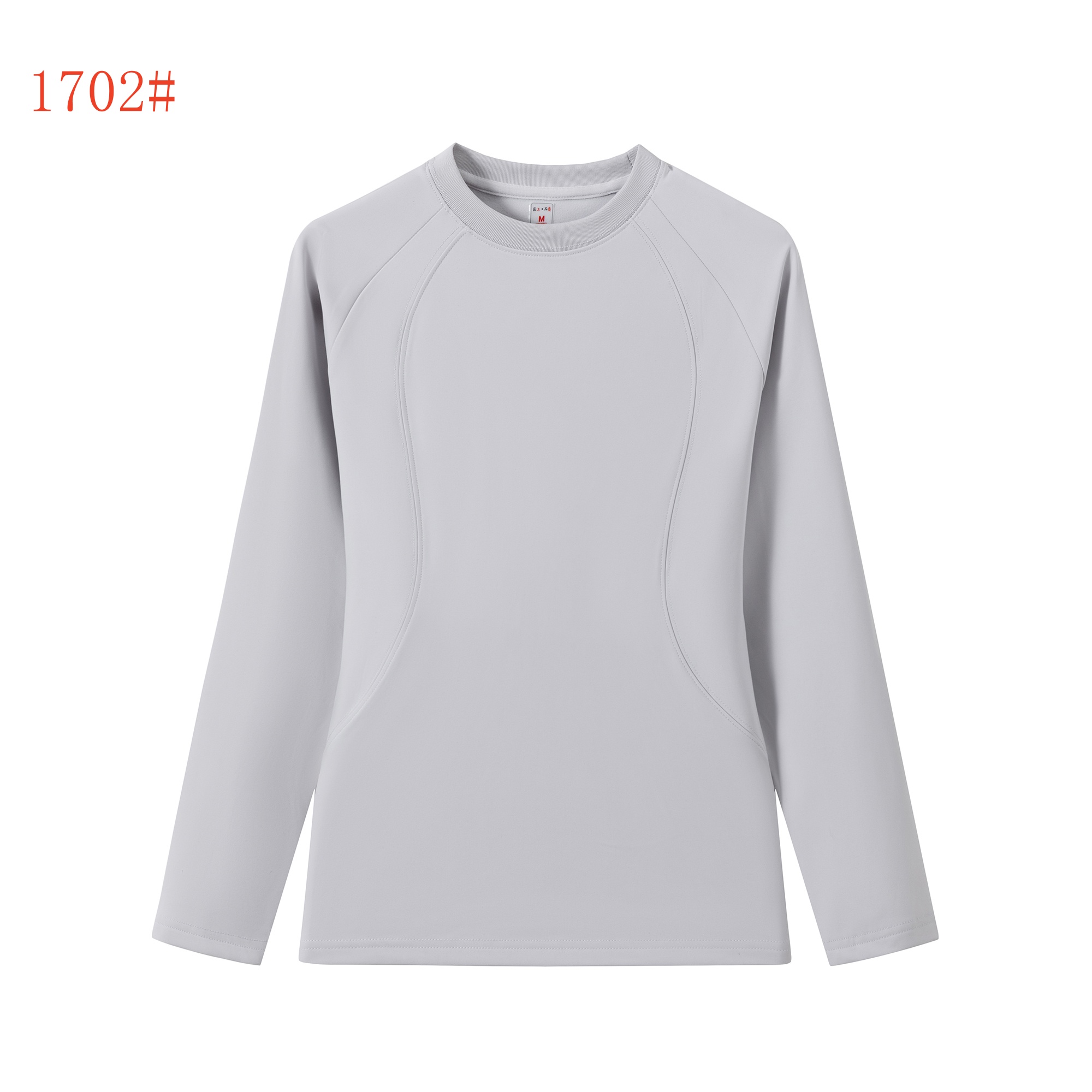
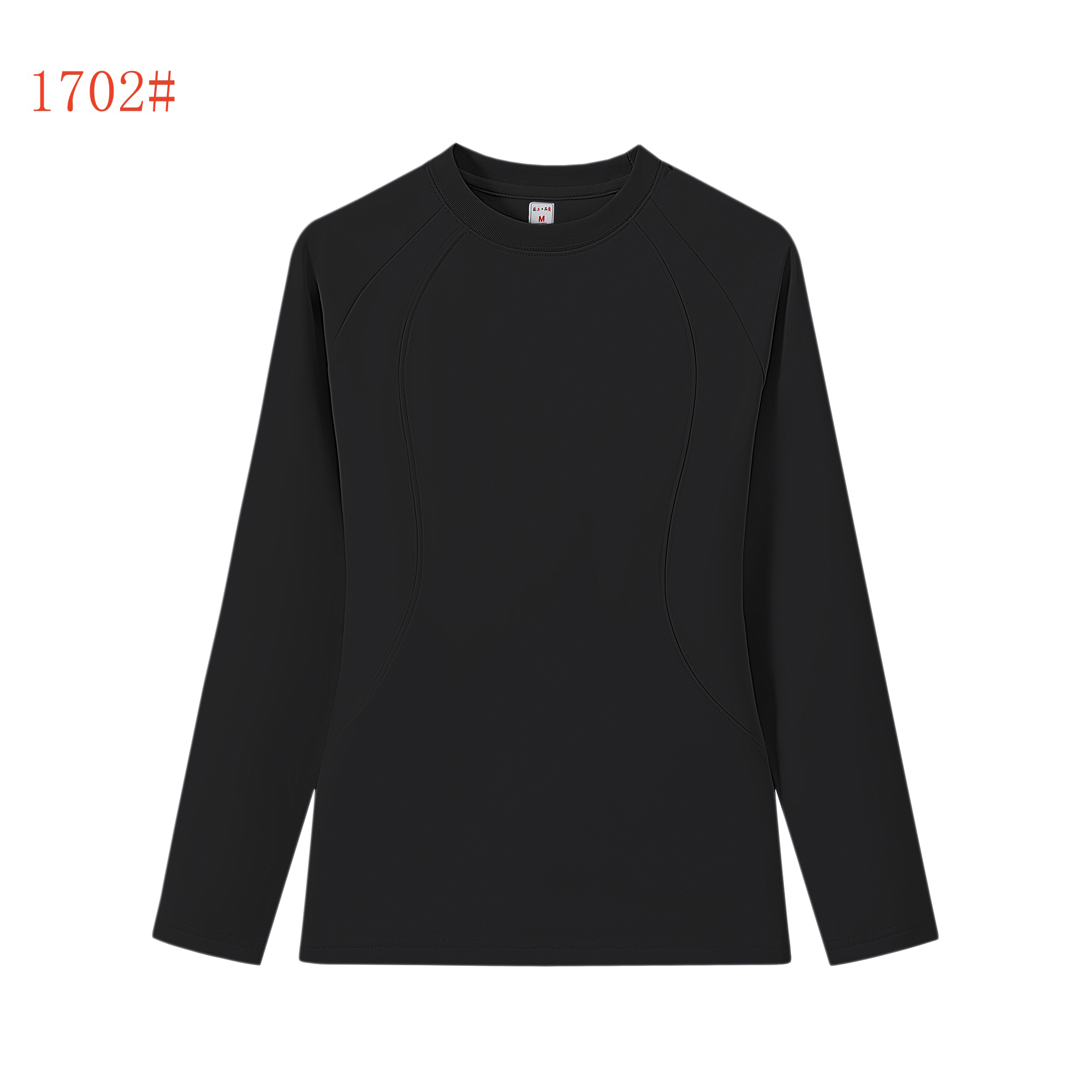
Style 1702 is a women's raglan long sleeve built on that logic, in a smooth stretch knit with curved panel seams running from the underarm to the front hem. It runs M to 2XL in pearl white, ink black and star grey. This guide covers what the raglan seam changes, how the panel seam is drafted and sewn, what a stretch knit needs to hold its shape through washing, and how to read the size chart when the shoulder measurement is only a reference.
What a raglan seam actually does
A set-in sleeve joins the body at a seam that sits on top of the shoulder. That seam has to be placed at the right point on the shoulder for the garment to hang correctly, and the shoulder point is the measurement that varies most between body shapes at the same chest size. A raglan replaces that seam with a diagonal line from the underarm to the neckline, which means the fabric is no longer cut at the shoulder point at all.
Three consequences follow, and all three matter to a buyer.
Fit tolerance. A raglan accommodates a shoulder that is wider or narrower than the block assumes, because the seam is not anchored at the shoulder point. In a programme sold online, that is a measurable reduction in size-related returns.
Seam placement. The diagonal seam sits away from the point where a soft knit is most stretched during sewing, so the shoulder stays flat instead of puckering. On a close-fitting women's top, that is the difference between a clean line and a pulled one.
Look. A raglan reads as a knit top or an athletic layer. A set-in shoulder reads as a shirt. On a women's long sleeve worn on its own, the raglan is the more contemporary of the two, and it is also the more forgiving across body shapes.
The cost is pattern work and a longer seam to sew. A raglan seam is roughly 1.5 times the length of a set-in shoulder seam, and it curves, so it needs to be sewn with the correct amount of ease distributed along the curve rather than pulled straight.
The block, in numbers
Measurements below are garment measurements in centimetres, taken flat, with a tolerance of 1-3 cm on a hand-measured production sample.
| Size | Shoulder (ref.) | Chest (1/2) | Body length | Sleeve |
|---|---|---|---|---|
| M | 37.5 | 48 | 61.5 | 56 |
| L | 39 | 51 | 63 | 57 |
| XL | 40.5 | 54 | 64.5 | 58 |
| 2XL | 42 | 57 | 66 | 59 |
The shoulder figure on the chart is a reference, not a construction point. It is measured across the back between the two raglan seams at the widest point, because buyers compare that number with their own block and with retail size guides. On a raglan it should be read as a body width rather than as a seam position - a distinction that matters when a buyer asks for the shoulder to be widened, which on this construction is done by changing the neckline width, not by moving a seam.
The chest grows 3 cm per size, the body length 1.5 cm and the sleeve 1 cm. The 1.5 cm length step is the one to watch: on a close-fitting top, a larger length step makes the 2XL read as a different garment rather than a larger one. A market that wants a longer line at the top of the range should extend the 2XL as a separate pattern.
The panel seam, and how it differs from a princess seam
The curved seam on this style starts at the underarm, sweeps forward across the rib cage, and finishes at the hem. It is not a princess seam, although the two are often confused. A princess seam runs from the shoulder or the armhole down through the bust to the waist and is used to shape a woven garment; this one is a design line on a knit, and it shapes the garment only slightly.
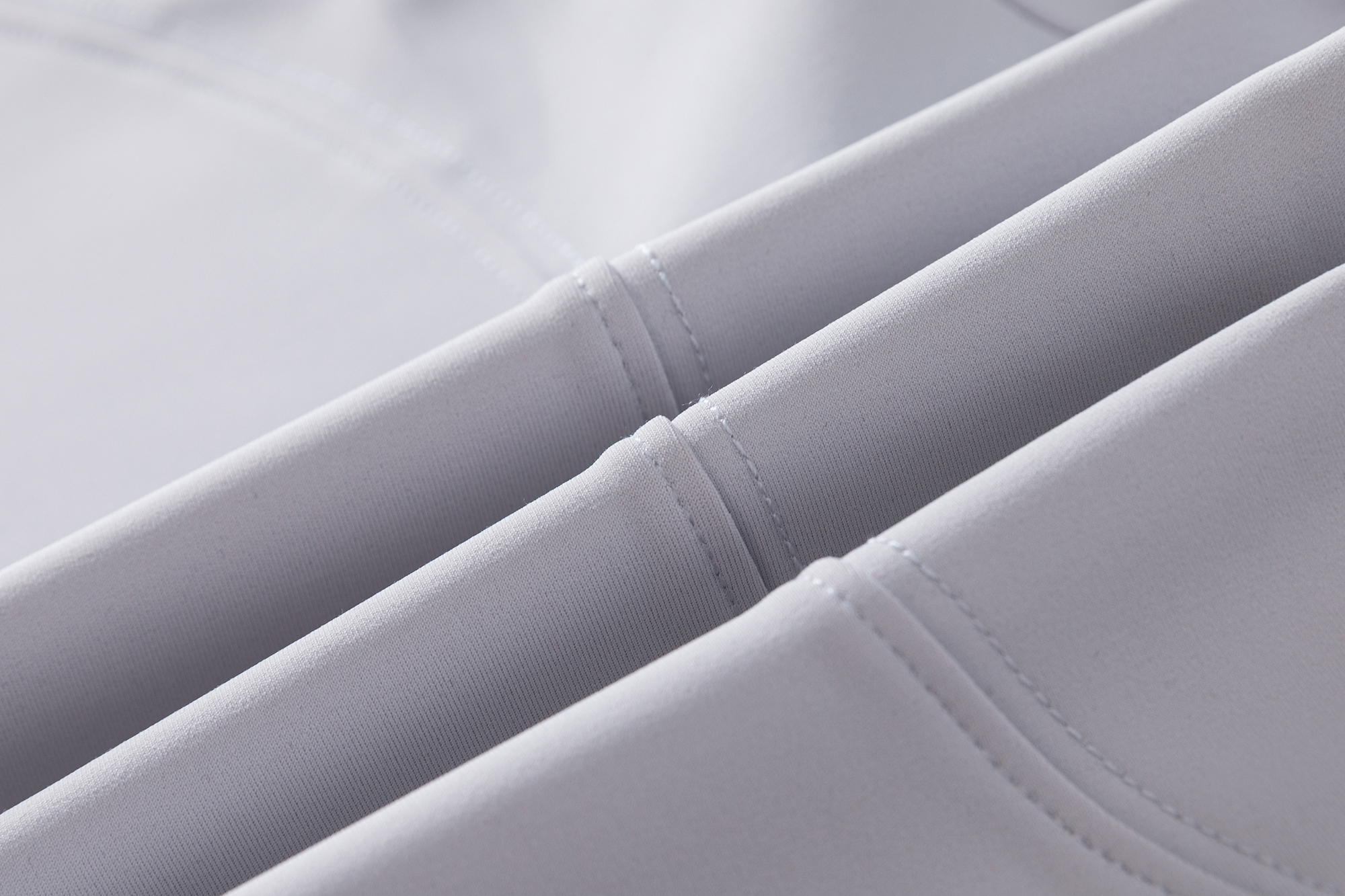
That distinction decides how it is sewn. On a knit, a curved seam that carries shape has to be stabilised, or it will stretch as it is fed through the machine and the curve will flatten. The usual method is a narrow strip of fusible stay tape along the seam line, applied before joining, plus a coverstitch or a twin-needle topstitch on the finished seam to hold the allowance flat.
The topstitch is also the design. On a smooth knit the seam reads as a fine double line, and the accuracy of that line is what the customer sees: a 1 mm wander on a curve is visible at arm's length. That is why the seam belongs in the construction notes with a specified stitch width, not left to the operator.
The neckline, on a knit that moves
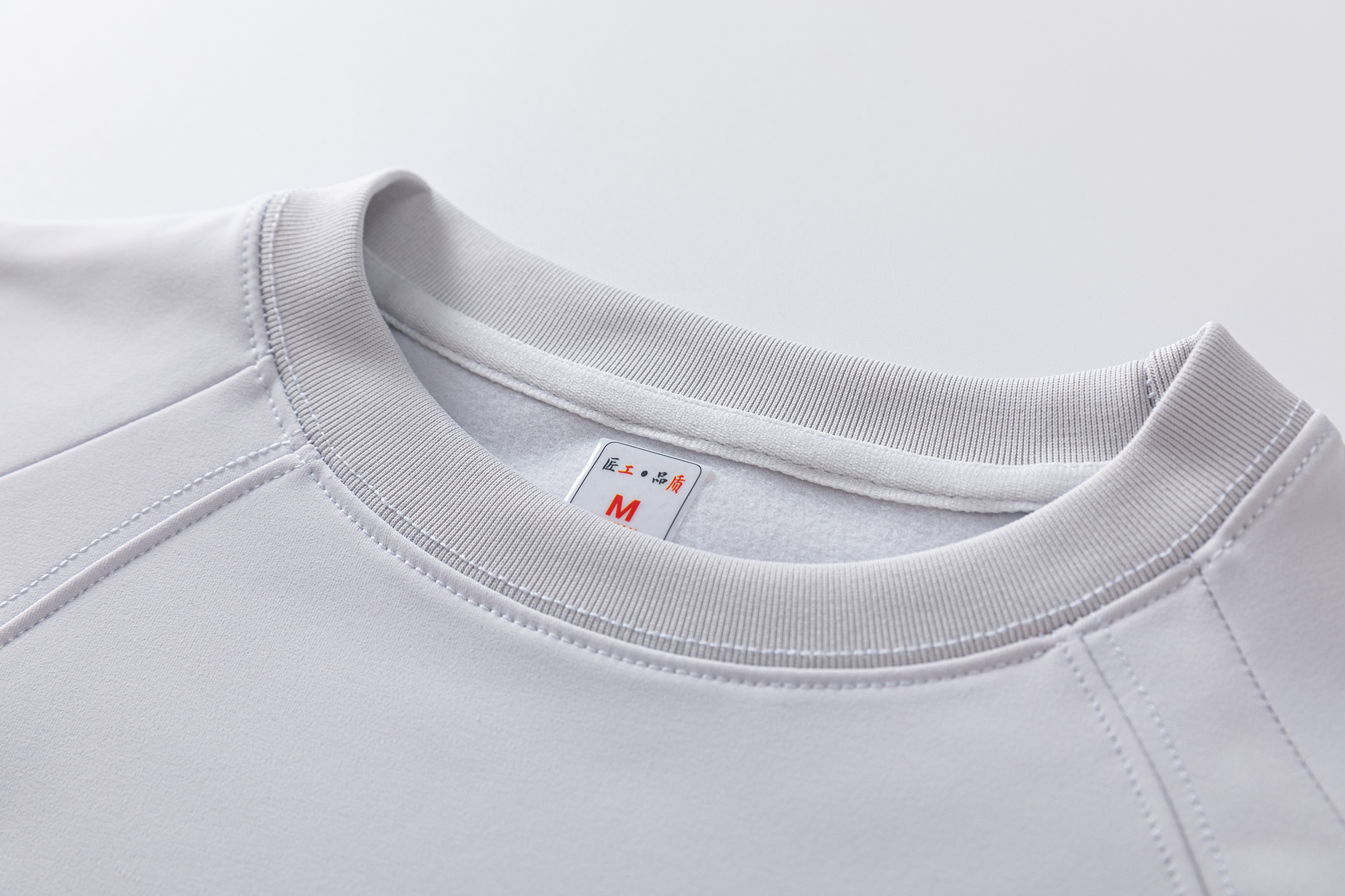
A crew neck on a stretch knit needs a rib that is cut to a set ratio against the neck opening - typically 0.8 to 0.85 of the opening length, depending on the rib's stretch - and joined with the stretch distributed evenly around the curve. Cut too long and the neckline stands away at the front; cut too short and it gathers the body into the neck.
The neck tape matters more on this style than on a looser top. A close-fitting knit is pulled over the head every time it is worn, and the neckline takes that load directly. A tape - self-fabric or a soft twill - covers the seam allowance, stops it from irritating the neck, and keeps the opening from stretching into a wave. Without it, a stretch neckline on a fitted top is the first thing to fail.
Stretch, recovery and the shape after ten washes
A close-fitting long sleeve in a stretch knit is judged in the second month, not the first. Two properties decide how it ages: how much it stretches, and how much of that stretch it gives back.
Stretch is quoted as a percentage in each direction. Recovery is quoted as the percentage of the original dimension the fabric returns to after being held at stretch. A knit that stretches 60 percent and recovers to 95 percent will mould to the body and come back; one that stretches 60 percent and recovers to 85 percent will grow progressively at the elbow, the seat and the neckline, and no amount of careful washing will bring it back.
The test is cheap and worth specifying: cut a 100 mm square, stretch it to a fixed extension, hold for 30 minutes, release, and measure after 60 minutes. Ask for the figure on the finished fabric in the finished shade, because dyeing and heat-setting both affect recovery.
Care instructions follow from the same property. Washing at a low temperature and drying flat or on a line preserves recovery; tumble drying at high heat relaxes the knit and accelerates growth. On a fitted top, a care label that recommends a hot wash and a hot dry is a specification error, not a customer problem.
Hem, cuff and the length decision
The hem and cuffs on this style are turned and coverstitched rather than ribbed. On a fitted top that is the right choice: a rib cuff adds bulk at the wrist and reads as a sweatshirt, while a coverstitched hem follows the body and keeps the sleeve close.
The coverstitch has to be set for the fabric, not for the machine's default. Too much differential feed and the hem waves; too little and it cracks when stretched over the hand. The check is to stretch the cuff over a fist and look at the stitch: it should open without the thread breaking and return flat.
Length is the other decision. At 61.5 cm in M this top finishes at the high hip, which is designed to be worn loose over a waistband or tucked. A buyer who wants a tunic length should extend the body and move the panel seam with it; extending only the hem leaves the seam finishing too high, and the line that gives the garment its shape disappears.
Decoration on a smooth stretch face
A smooth, low-sheen knit is a good surface for print and a difficult one for heavy embroidery. Plastisol and water-based screen prints both sit well, but a large solid print across the chest will change how the panel seam reads, because the ink covers the line. On this style, decoration usually works best placed high on the chest or on the sleeve, clear of the seam.
Embroidery needs a soft backing and a light underlay. On a stretch knit, a dense logo will cup the fabric around it, and a stiff backing will show as a square. Small left-chest logos are the practical limit; anything larger should be tested on a wearer before bulk.
Heat-seal labels, printed care tapes and woven side tags are applied during finishing and must be confirmed before production. On a close-fitting top, the neck label is the detail a wearer notices first: a stiff woven label against a soft neckline is a return waiting to happen, and a heat-seal label sits flatter.
Minimums, lead times and inspection
Custom orders start at 200 pieces per style and per colour, with sampling in 5 to 7 working days and bulk production in 15 to 25 days after sample approval and fabric arrival. Stock blanks are held in depth - more than 200,000 units in a 5,000 square metre warehouse - and stock orders can start at ten pieces with dispatch inside three days, which is enough to run a fit and wash test before committing to bulk.
Inspection follows the AQL standard across the lot, with manual checks on raglan seam alignment at the neckline, panel seam symmetry left to right, neckline recovery, cuff and hem width, and measurements against the approved sample. Seam symmetry is the check specific to this style: a panel seam that sits 5 mm higher on one side is not visible on a hanger but is obvious in a mirror.
The style sits in the women's programme alongside the hooded blocks, listed under custom women's hoodies and tops, and the wider range of lengths and necklines is in the custom long sleeve shirts category. The style page for this block is women's raglan long sleeve shirts, style 1702.
Questions buyers ask before ordering
Why does the size chart list a shoulder width on a raglan?
Because buyers compare it with their own block and with retail size guides. On this construction it is a body width measured between the seams, not a seam position. If you need a wider shoulder, the change is made at the neckline width, and the pattern has to be re-sampled.
Will the panel seam stretch out of shape?
Not if it is stabilised. A curved seam on a knit grows as it is sewn unless a fusible stay is applied along the seam line, and the finished seam needs a topstitch to hold the allowance flat. A sample that waves at the seam is a construction fault, not a fabric fault.
Can this be made in a heavier fabric for winter?
Yes, but the block has to change. A heavier knit needs more ease at the chest and a wider sleeve, or the top will read as shapewear. The pattern should be re-drafted for the fabric rather than re-cut from the same block, and the panel seam position should be checked on the new weight.
For a first order, the practical route is one style in two shades - a pale and a dark - worn for a week and washed three times before the bulk commitment. On a fitted knit, that week answers the questions a photograph cannot: whether the neckline holds, whether the elbow grows, and whether the panel seam still reads as a line rather than a wrinkle.
Share to:


